More Information
In order to take care of an institution’s collections, it’s first necessary to know exactly what they hold. This might seem like an obvious statement at first, but as any archivist will tell you, it is the crucial first step to any preservation project. And in the case of an institution like UCLA Library, whose Special Collections span more than 100 years to the present, it is also a more daunting and complicated undertaking than it might initially appear.
In January 2024, I joined UCLA Library as the project manager for the Audiovisual (A/V) Survey, conducted under the Preservation & Conservation Department for UCLA Library Special Collections (LSC). The purpose of the survey is to create a comprehensive inventory of physical audiovisual assets that are currently held by Library Special Collections, including film, audio and video formats.
This survey aims to document key information about these A/V materials, including format type, quantity, condition of both the item itself and its housing, and the uniqueness of the recorded content.
Mapping A/V Materials in Library Special Collections
Working closely with Yasmin Dessem, head of audiovisual preservation, we gathered information from Library Special Collections finding aids and consulted with curators from across individual LSC units to aid us in identifying which collections are believed to contain audiovisual material. These units include Performing Arts, University Archives, the Charles E. Young Research Library and Louise M. Darling Biomedical Library History and Special Collections for the Sciences.
As the survey has progressed, the number of collections represented has only continued to grow. In some cases, we’ve identified collections where audiovisual content was not accurately captured in finding aids; in others, materials emerged as collections were processed and moved out of the backlog. We now have nearly 800 distinct archival collections on our survey list that are believed to contain A/V material.
Surveying on Site at SLF-S
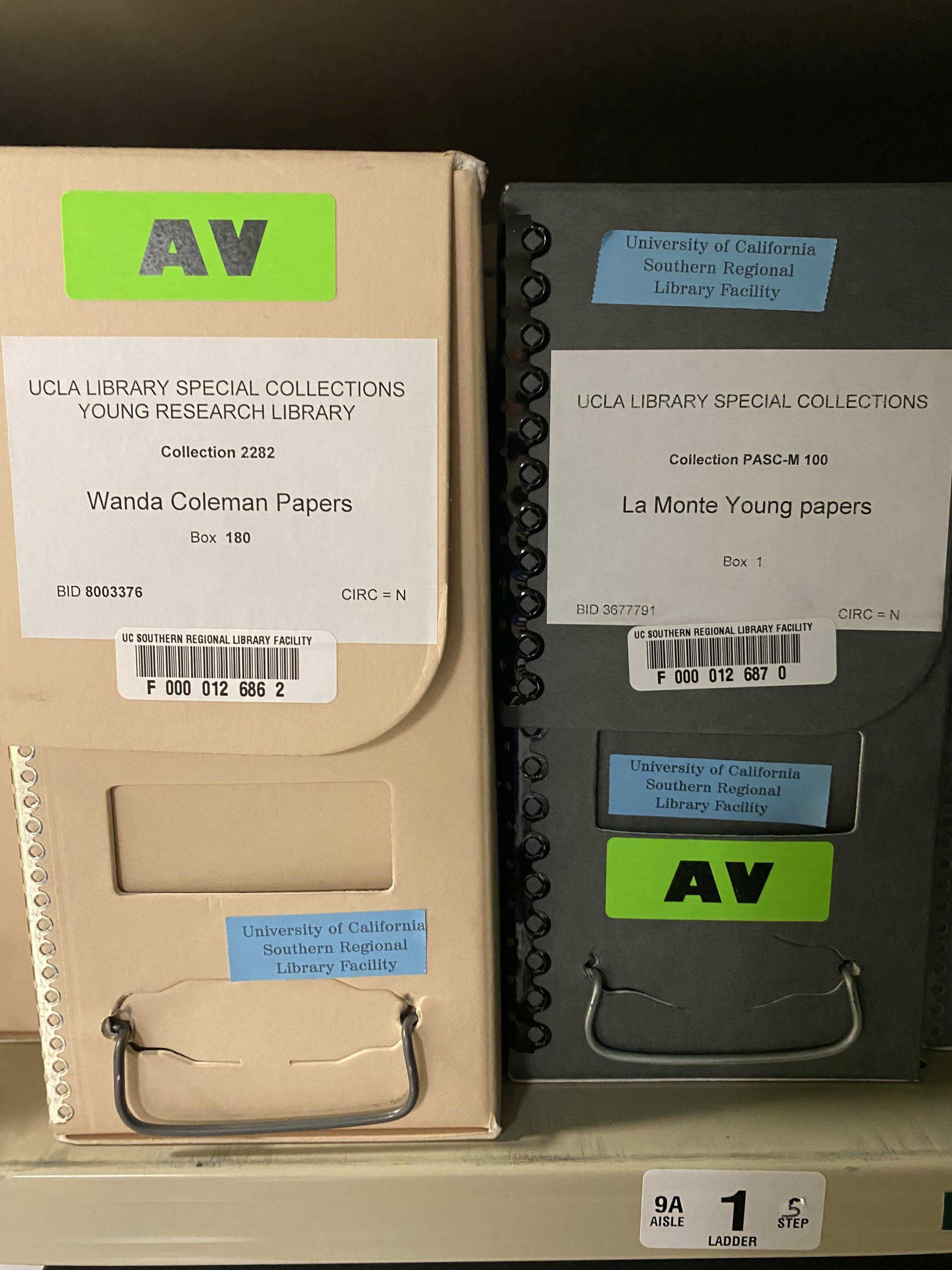
Because the bulk of Library Special Collections material is stored at the Systemwide Library Facility-South (SLF-S, formerly the Southern Regional Library Facility or SRLF), the survey team has set up workstations for direct access the materials. Working both in the SLF-S reading room and in the stacks, our team pages boxes from off the shelves and logs our findings in the survey’s Airtable database.
Assessing Condition and Treatment Needs
While we can accurately say at this point in the survey that the majority of our audiovisual collections show no obvious signs of advanced degradation, we have unfortunately encountered a number of items in less-than-ideal conditions.
In some collections, we have identified recordings and other materials with mold, which our team handles through a triaging system developed with Chela Metzger, head of Preservation & Conservation, and Kimi Taira, preventative conservator. Materials afflicted with severe or active mold are separated out from their boxes and moved into a separate bin where they are sealed in plastic bags.
Other conditions we have encountered include:
exudation, the appearance of a cloudy or sometimes glittery substance on the surface of an acetate disc or reel caused by a chemical breakdown of the plasticizer in the coating
vinegar syndrome, the breakdown of acetate-based film and tapes that produces a vinegary odor
water damage
physical damage to the items themselves, including poorly wound reels, crinkled tapes and scratched discs
Current Findings
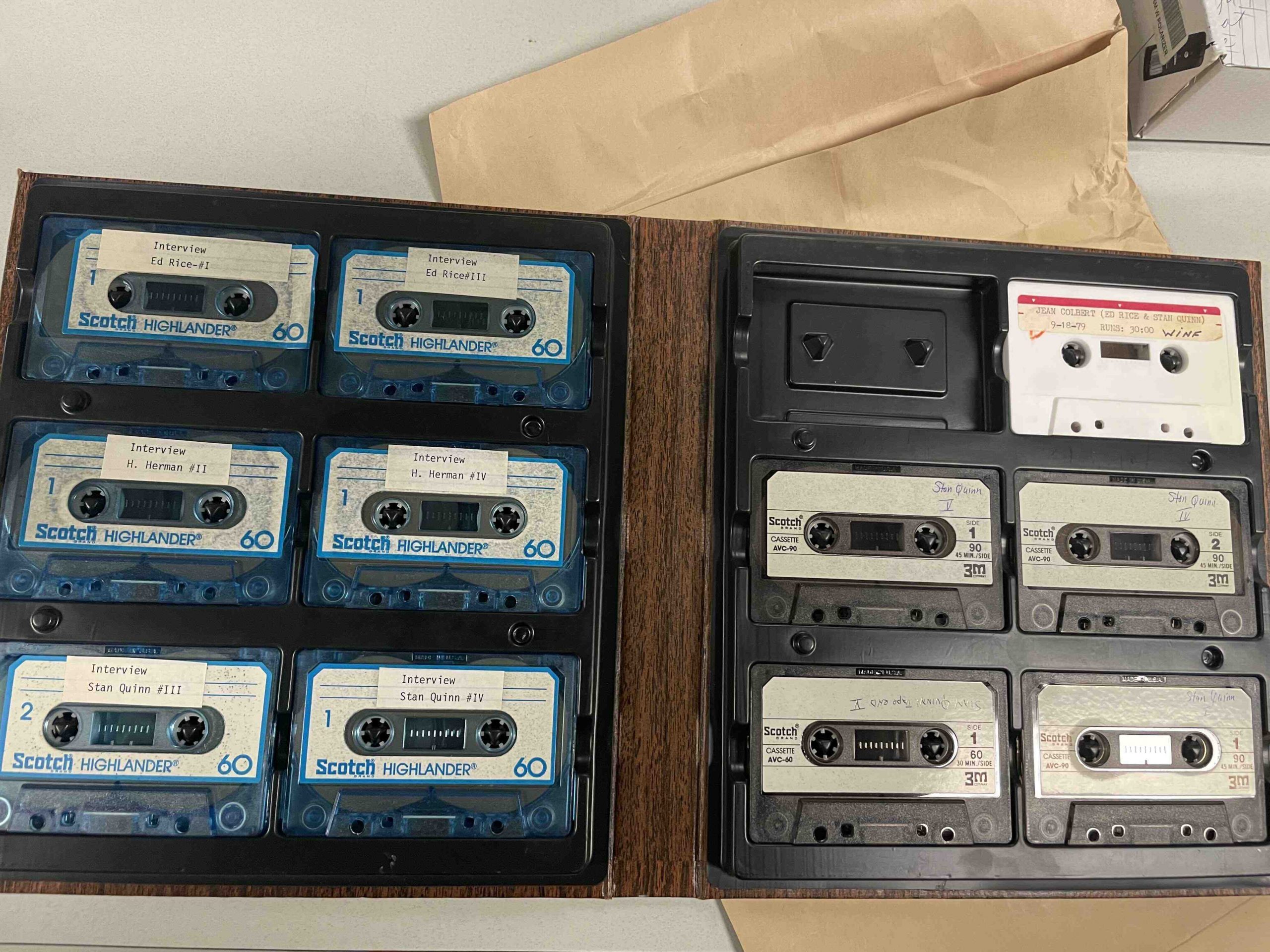
So far, the majority of audiovisual materials in Library Special Collections consist of audio recordings, with video and film elements in a distant second and third place. The bulk of material consists of magnetic media, including ¼” audio tape, audiocassettes, VHS, Betacam, U-matic and other tape-based formats. We also have plenty of grooved media (LPs, transcription discs), optical media (CDs, DVDs) and film elements as well.
We have been extremely fortunate to work with many UCLA students on this survey, many of whom are current or former Master of Library & Information Science (MLIS) students. It is our hope that this survey gives students valuable firsthand experience in handling audiovisual items.
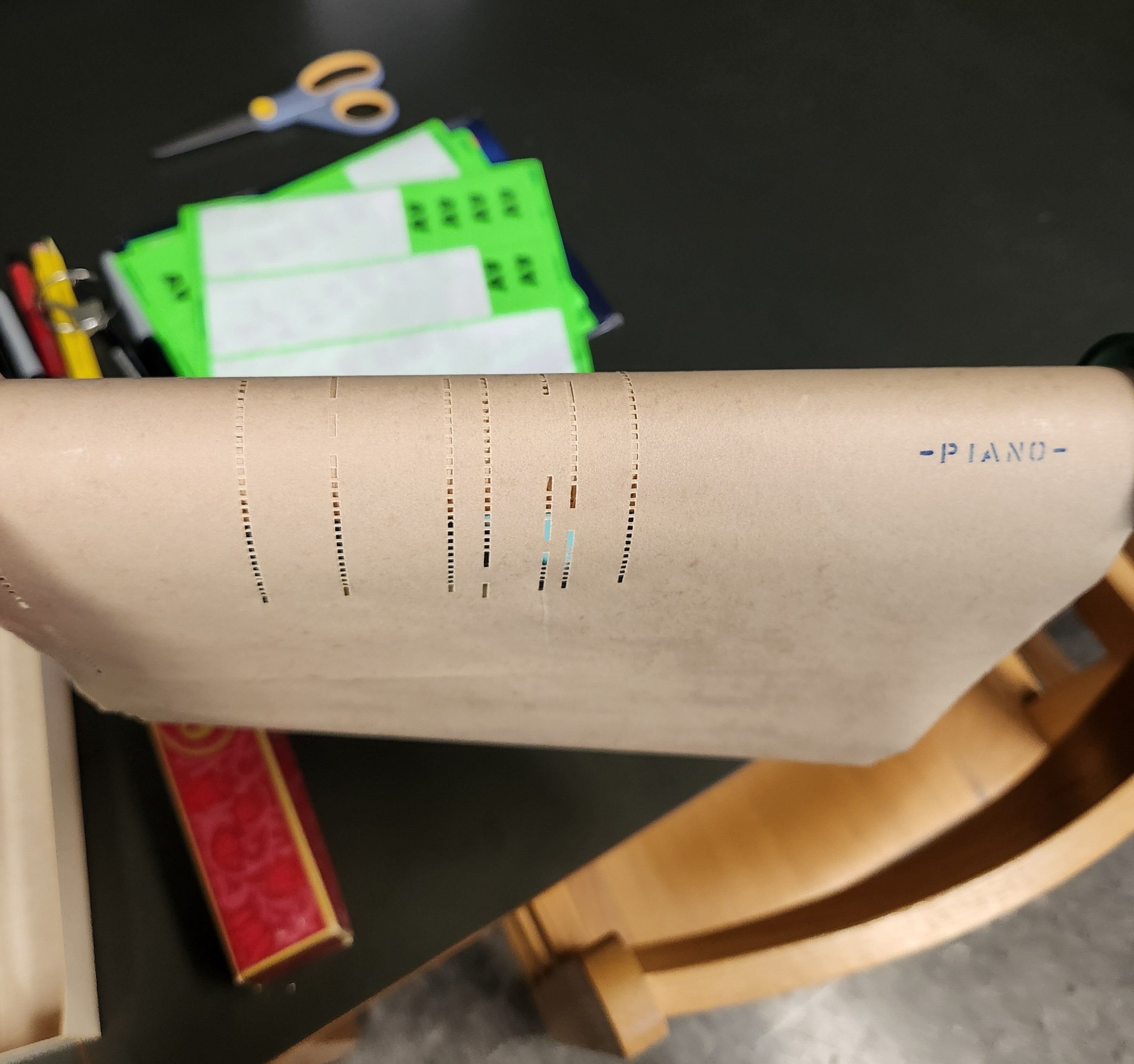
Working together, our students have identified just about every possible A/V format in our collection imaginable, from common formats like VHS tapes and compact discs to more obscure and obsolete ones, including 1” videotape, 8mm films, flexi discs, and even piano rolls!
Unexpected Discoveries
While the general purpose of the survey is documentation for future preservation, prioritization and decision-making, there have been a few discoveries along the way which we deemed intriguing enough to digitally capture.
Tucked away in a manila folder within the papers of the director, actor, writer and producer Richard Wilson, we found several SoundScriber discs, an obsolete mid-20th-century instantaneous recording format that functioned as a proto-voice memo. The discs contain the voice of Orson Welles, a frequent collaborator of Wilson’s. The recordings capture Welles’ editing notes to himself as he worked on his film adaptation of Macbeth (1948).
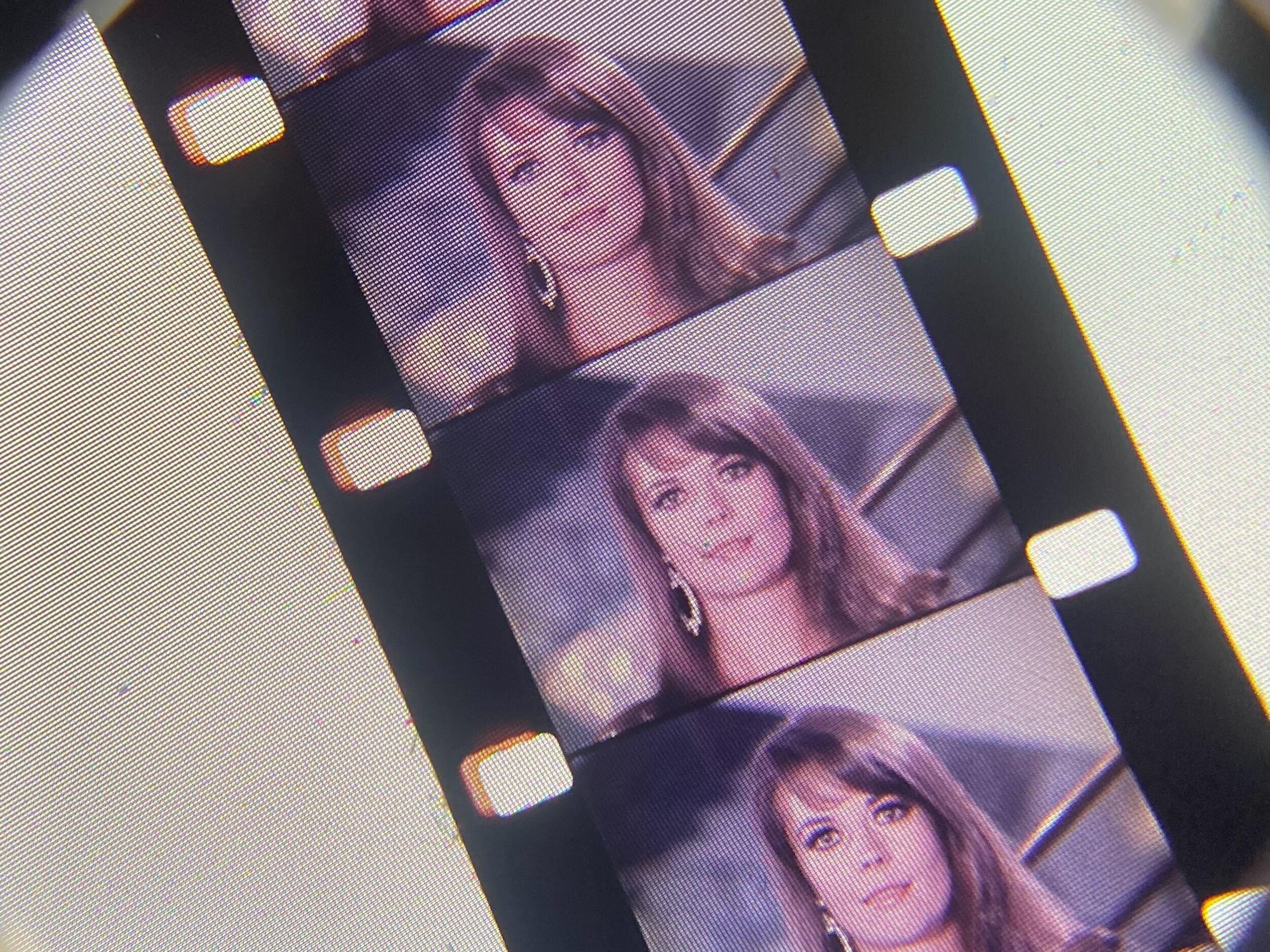
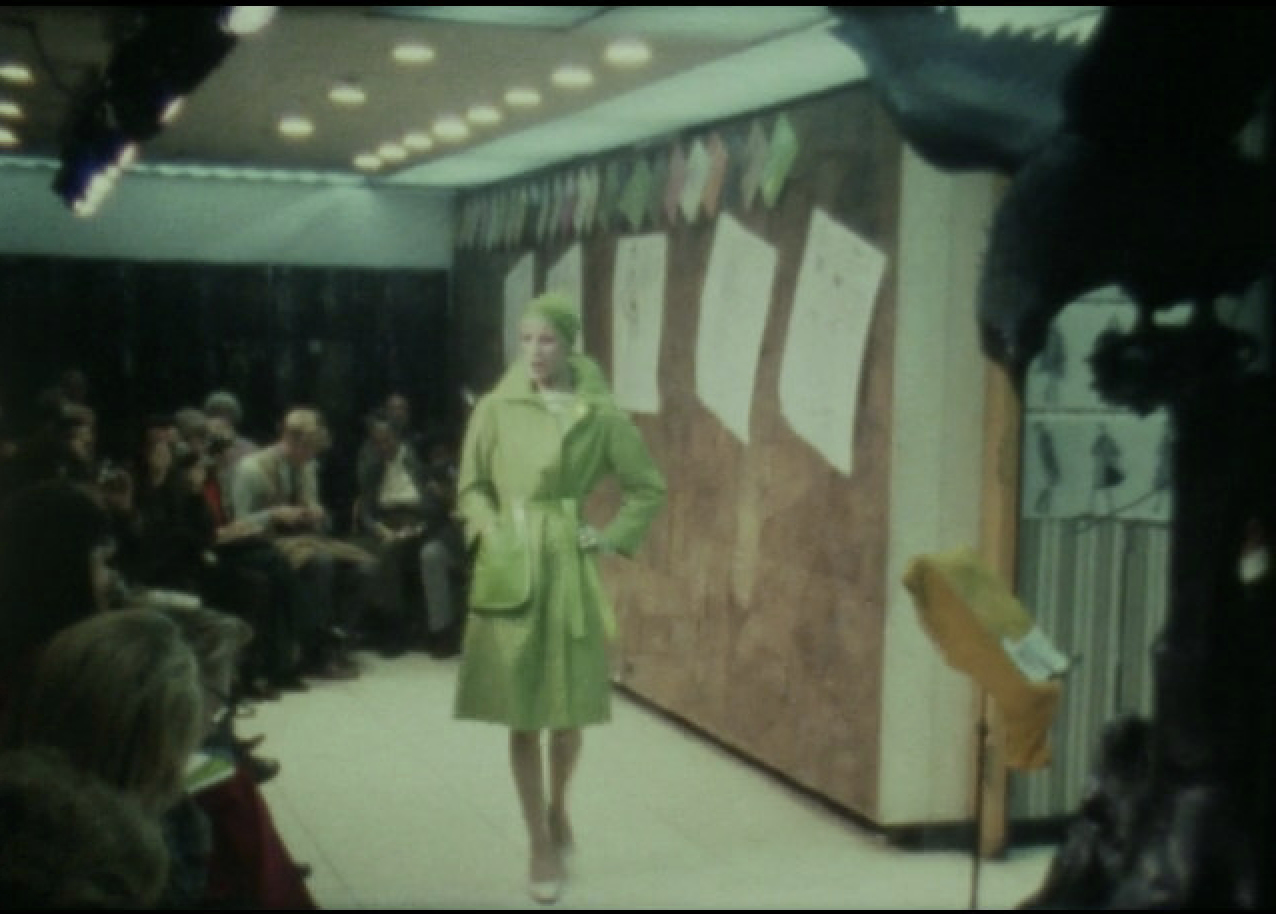
In another collection, our team identified silent Super 8 film footage of runway shows by the legendary designer Bonnie Cashin from the 1970s, which have since been digitized in-house by our A/V Preservation team members Maile Chung and Gabz Norte.
These are just two of the many fascinating discoveries that have been hiding in our collections.
Looking Ahead
The survey team recently reached a major milestone: over 100,000 audiovisual items have now been surveyed, and the number continues to grow.
Although we’re nearing the end of the survey and currently down to the last couple dozen collections, many of those remaining are also among the largest. For example, the UCLA Athletics collection alone totals over 780 boxes and contains decades’ worth of recorded UCLA sporting events.
So even after two very productive years of surveying, we’ve still got our work cut out for us!


