Visit the UCLA Film & Television Archive website(opens in a new tab) to learn more about upcoming screenings and events.
Free admission. No advance reservations. Your seat will be assigned to you when you pick up your ticket at the box office. Seats are assigned on a first come, first served basis. The box office opens one hour before the event.
In person: Introduction by Associate Professor Josslyn Luckett, NYU Cinema Studies, and Professor Karen Umemoto, Helen and Morgan Chu Director of the UCLA Asian American Studies Center. Q&A with Luckett; filmmaker Tadashi Nakamura; film producer Karen L. Ishizuka, widow of Robert A. Nakamura and mother of Tadashi Nakamura; and Celine Parreñas Shimizu, dean, UCLA School of Theater, Film and Television; Renee Tajima-Peña, professor and director, UCLA Center for EthnoCommunications.
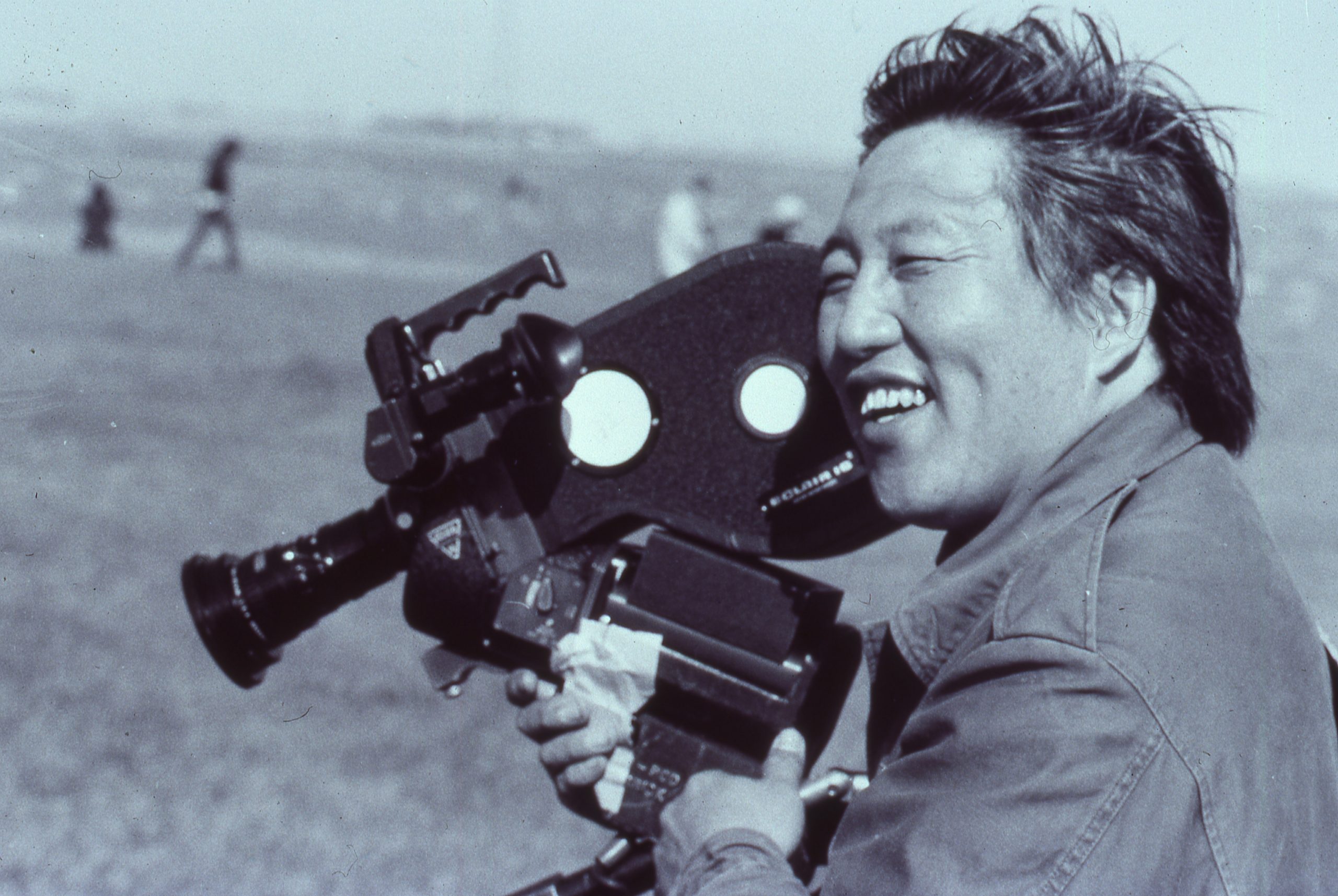
This program is a continuation of Toward a More Perfect Rebellion: Multiracial Student Activism at UCLA, which celebrates the radical filmmaking legacy of UCLA’s affirmative action initiative, the Ethno-Communications Program (1969–1973). This iteration honors Ethno-Communications alumnus Robert A. Nakamura (1936–2025), who taught film at UCLA for over 30 years and was widely known as the “godfather of Asian American media.” A co-founder of the pioneering media organization Visual Communications, Nakamura co-directed a milestone feature-length film made by and about Asian Pacific Americans, Hito Hata: Raise the Banner (1980). Shaped by his internment at age six in the prison camp Manzanar during World War II, he transformed personal history into landmark films that helped change how Asian Americans are seen on-screen.
Series programmed by Associate Professor Josslyn Luckett, NYU Cinema Studies, and Public Programmer Beandrea July. Notes written by Beandrea July.
Screening 1 of 4
Manzanar
Year: 1971
Country: U.S.
Language: English
Runtime: 16 min.
Digital. Color.
Shot with a three-person crew of fellow UCLA Ethno-Communications student filmmakers, including Betty Chen, Manzanar is a lyrical, intimate documentary in which Robert A. Nakamura, a Nisei, reflects on his internment at age six and its enduring impact. Returning to the desolate site of Manzanar — one of 10 camps where Japanese Americans were unjustly imprisoned during World War II — Nakamura grapples with fragmented recollections of family, community and loss. As the film meditates on the lasting psychological impacts of internment, it also explores what it takes to face the unhealed wounds of the past and reclaim one’s identity.
Director: Robert A. Nakamura.
Screening 2 of 4
Pilgrimage
Year: 2002
Country: U.S.
Language: English
Runtime: 22 min.
Digital. Color.
This short traces how the former Manzanar WWII concentration camp has been reclaimed by subsequent generations of Japanese Americans as a site of remembrance, resistance and intergenerational solidarity. Blending never-before-seen archival footage with a contemporary sensibility, the film follows the annual Manzanar Pilgrimage as it takes on renewed meaning in a post-9/11 world. Though produced by his parents, Karen L. Ishizuka and Robert A. Nakamura, director Tadashi Nakamura steps confidently out of their shadow through a hip-hop–inflected score and music by Yellow Pearl, whose fusion of folk, blues, soul and jazz energized a new generation of Asian American youth.
Director/Editor: Tadashi Nakamura.
Screening 3 of 4
Wataridori: Birds of Passage
Year: 1976
Country: U.S.
Language: English
Runtime: 37 min.
Digital. Color.
A landmark documentary of Japanese American community memory and resilience, Robert A. Nakamura’s Ethno-Communications M.F.A. thesis film (UCLA School of Theater, Film and Television ’75) recounts the stories of three intertwined Issei lives — a fisherman, a gardener and a pioneering farm family. Weaving personal memory and collective history, Nakamura includes his own father, a gardener, who recalls bicycling to work with a lawnmower tied to his back. The short is also a foundational work of Visual Communications, the trailblazing Asian American media collective Nakamura co-founded in 1970 with Duane Kubo, Alan Ohashi and Eddie Wong.
Director: Robert Nakamura.
Screening 4 of 4
Third Act
Year: 2025
Country: U.S.
Language: English
Runtime: 91 min.
Digital. Color.
“How do you repay someone who has given you everything? This film became my answer.”—Tadashi Nakamura
Inspired by Wataridori: Birds of Passage, Tadashi Nakamura documents his father’s life and legacy in a profound act of love. As Parkinson’s disease shapes the elder Nakamura’s titular third act, the film confronts the psychic costs of Japanese internment and assimilation, and the ways imagemaking and familial togetherness became forms of resistance. Shot over seven years, the documentary premiered in the U.S. Documentary Competition at the 2025 Sundance Film Festival.
Director: Tadashi Nakamura. With: Robert Nakamura, Karen L. Ishizuka.
Have Further Questions?
We're here to help. Chat with a librarian 24/7, schedule a research consultation or email us your quick questions.