Visit the UCLA Film & Television Archive website(opens in a new tab) to learn more about upcoming screenings and events.
Free admission. No advance reservations. Ticketing is on a first come, first served basis. Seats will not be assigned.
Introduction by Head of Preservation Jillian Borders.
The Magnificent Matador
Year: 1955
Country: U.S.
Language: English
Runtime: 95 min.
Digital. Color.
World Theatrical Premiere of New Restoration
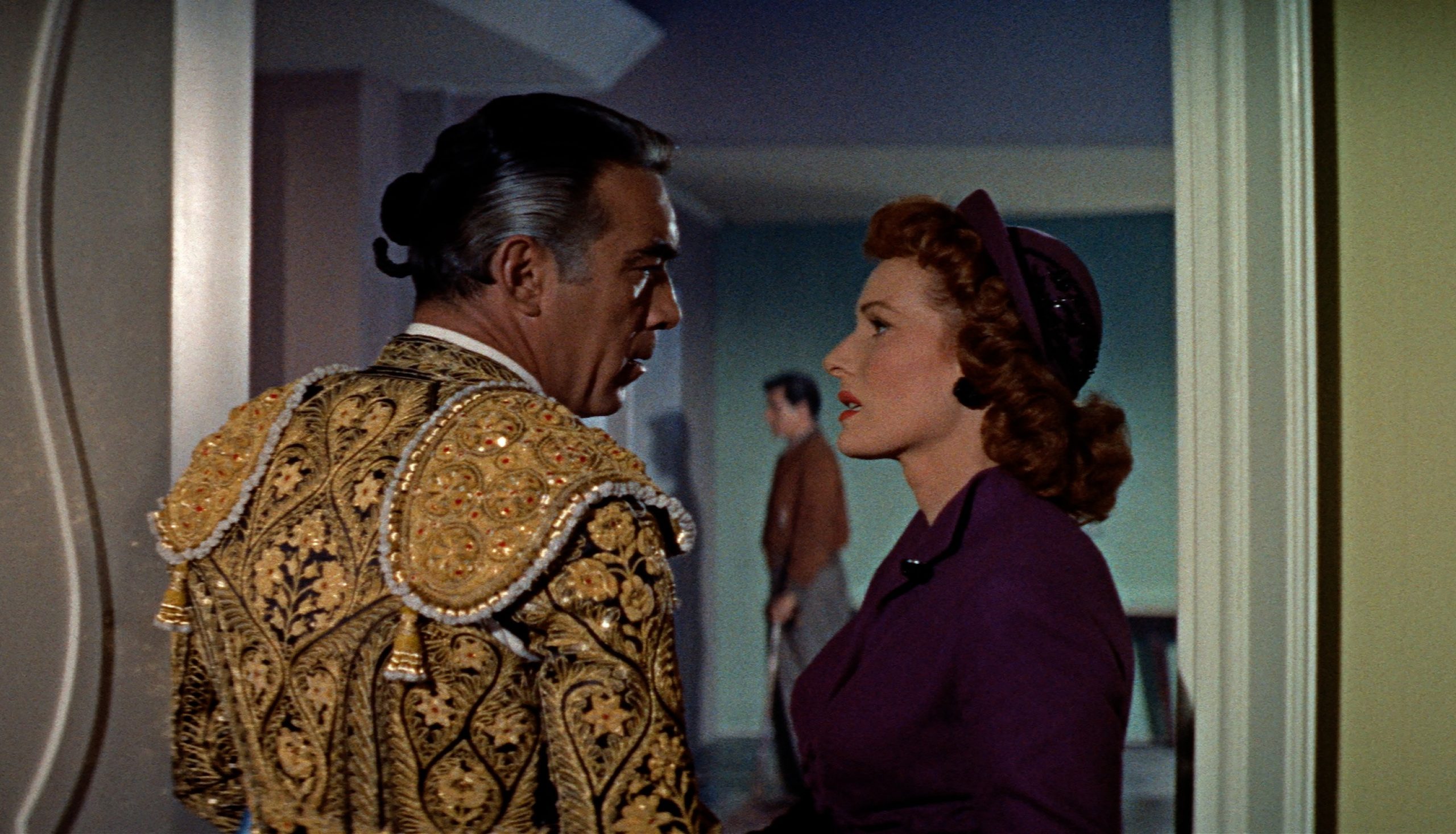
Trained as a matador in Mexico, director Budd Boetticher frequently returned to the topic of bullfighting in his films, from his start in Hollywood as a technical advisor on Rouben Mamoulian’s Blood and Sand (1941) to his first major film, The Bullfighter and the Lady (1951). Unsatisfied with the final editing of that film, Boetticher revisited his toreador past with The Magnificent Matador. In Boetticher’s words, “the story … isn’t just bulls. It’s really a love drama about a man on top who falters through fear, and an American woman who restores his faith in himself.” Mexican-born star Anthony Quinn was a natural to play “El Numero Uno,” having prior experience portraying matadors in Blood and Sand and The Brave Bulls (1951). Maureen O’Hara plays opposite him as his wealthy pursuer who becomes a possible means to his redemption.
Acclaimed cinematographer Lucien Ballard (The Wild Bunch, 1969) brought his well-trained eye to the striking vistas and big action in the ring. Filming entirely on location, Ballard utilized the large CinemaScope format in its full width to capture Mexico’s countryside, bustling Mexico City and its giant arena in vibrant Eastmancolor. Legends of Mexican bullfighting are featured in the corrida, including Jesús “Chucho” Solórzano, Antonio Velásquez and Jorge “El Ranchero” Aguilar. Action sequences were staged to avoid any gore (to man or bull) to satisfy the Production Code, with ballet-like choreography and masterful passes that Variety called “some of the best bullfight scenes yet captured on film.” Prominent matador Carlos Arruza offered technical advice as well as the shooting location of Pastejé, his bull-breeding ranch. Boetticher would later direct the documentary Arruza (1971), narrated by Quinn, chronicling the matador’s life and tragic death.—Jillian Borders
DCP. Production: National Pictures Corporation. Distribution: 20th Century-Fox. Producer: Edward L. Alperson. Director: Budd Boetticher. Screenwriter: Charles Lang. Based on a story by Budd Boetticher. Cinematographer: Lucien Ballard. With: Maureen O’Hara, Anthony Quinn, Manuel Rojas, Richard Denning.
Restoration funding provided by the Hobson/Lucas Family Foundation. Restored by the UCLA Film & Television Archive and The Film Foundation from the 35mm color separation master positives and a 35mm Cinemascope print. Laboratory services by Roundabout Entertainment, Inc., FotoKem, Audio Mechanics, DJ Audio, Inc. Special thanks to George Eastman Museum, Ignite Films.