Visit the UCLA Film & Television Archive website(opens in a new tab) to learn more about upcoming screenings and events.
Free admission. No advance reservations. Ticketing is on a first come, first served basis. Seats will not be assigned.
Introduction by UCLA Distinguished Professor Chon Noriega, School of Theater, Film and Television, and Processing Conservator Yesenia Perez.
Co-presented by the UCLA Chicano Studies Research Center.
World Premiere of New Preservations
In his piece Destructivism: A Manifesto (1962), artist and filmmaker Raphael Montañez Ortiz states: “The art that utilizes the destructive processes will purge, for as it gives death, so it will give to life.” A key figure in the Destruction in Art movement of the 1960s, Ortiz is best known for his object-based work and performance art, most notably his piano destruction concerts. However, his expansive oeuvre of time-based media art also merits revisiting. Ortiz experimented with film starting in the late 1950s, creating found-footage films that deconstruct/reconstruct conventional Hollywood, newsreel and instructional films as a means of combating the xenophobia, classism and repression manifested within them.
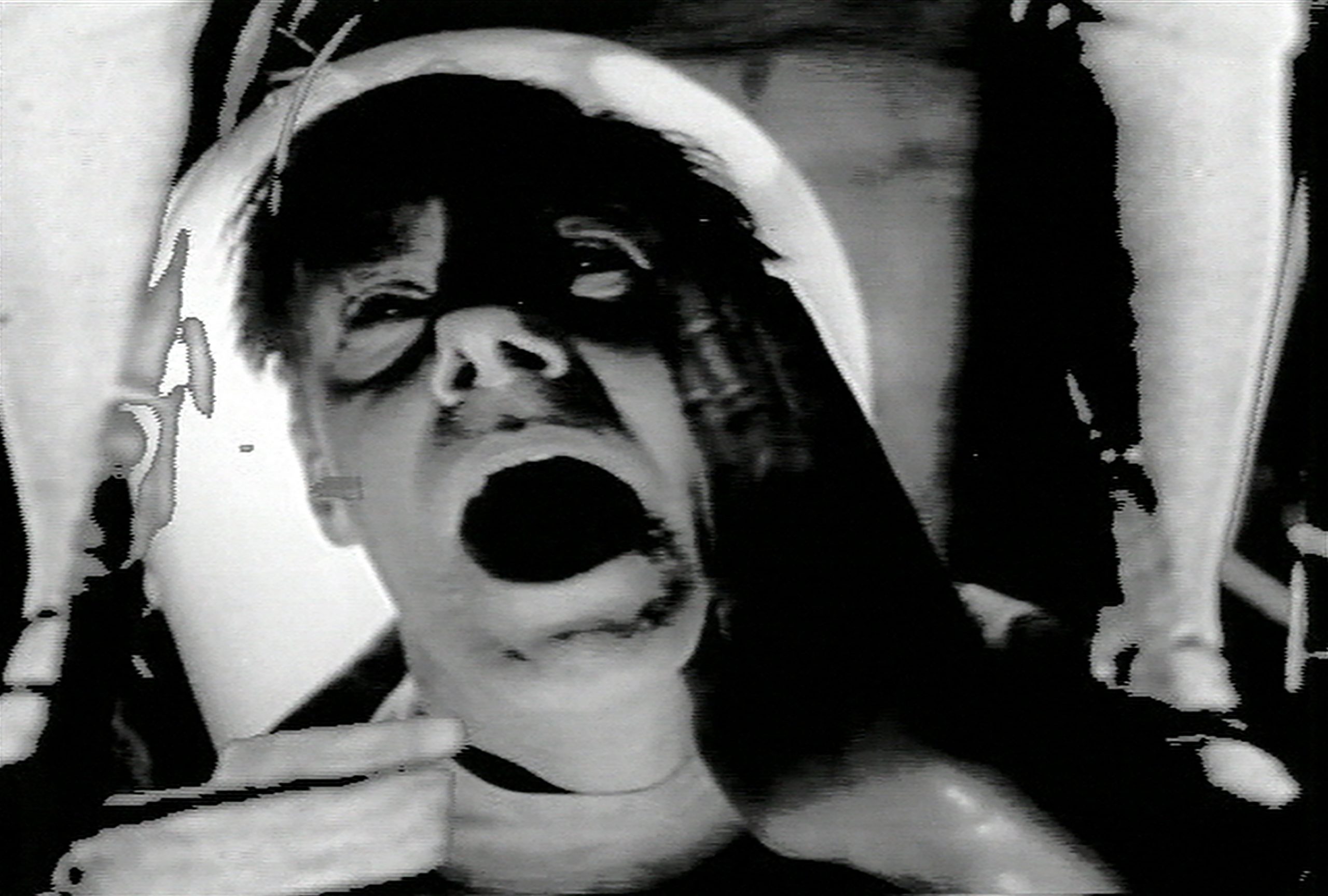
Decades later, Ortiz revisited this practice of partition and random reassembly; 1984 to 1997 was a fruitful period resulting in over 50 works Ortiz termed “computer-laser-videos.” The rise of consumer video formats and new technologies brought renewed opportunities for deconstruction — this time, in a realm that merged analog and digital. These videos were made by using films on laserdiscs (mainly titles from the 1930s to 1940s), selecting segments ranging from one to 10 seconds, editing and distorting clips via computer, and using joysticks to move footage back and forth at various speeds. Once it was finalized, Ortiz would transfer the footage to 3/4 in. videotape. This practice resulted in a new visual landscape of disjointed movement that was further heightened by the use of a wave-form generator to alter sound, creating a cacophony of words, music and disembodied noises. In expanding the length of these clips, Ortiz dissects and scrutinizes the whiteness, hegemony and gendered behaviors presented on-screen, reconstructing them as satire, performativity and artifice.
These four selected works are Ortiz’s final computer-laser-videos, marking a significant point in his career as an interdisciplinary artist and pioneer of the Destructivism movement.—Yesenia Perez
Screening 1 of 4
That's Too Much
Year: 1996
Country: U.S.
Language: Swedish with English subtitles
Runtime: 6 min.
Digital. B&W.
DCP. Director: Raphael Montañez Ortiz. Source: Dollar (1938), directed by Gustaf Molander.
Preservation funding provided by the Andrew W. Mellon Foundation. Digitally preserved by the UCLA Film & Television Archive and UCLA Chicano Studies Research Center from the director’s Betacam master. Laboratory services by The MediaPreserve. Special thanks to Raphael Montañez Ortiz, Chon Noriega.
Screening 2 of 4
Ring Ring Ragtime
Year: 1996
Country: U.S.
Language: Italian with English subtitles
Runtime: 12 min.
Digital. B&W and color.
DCP. Director: Raphael Montañez Ortiz. Sources: unidentified Italian film, undated footage from the Olympics.
Preservation funding provided by the Andrew W. Mellon Foundation. Digitally preserved by the UCLA Film & Television Archive and UCLA Chicano Studies Research Center from the director’s Betacam master. Laboratory services by The MediaPreserve. Special thanks to Raphael Montañez Ortiz, Chon Noriega.
Screening 3 of 4
Busy Bodies
Year: 1997
Country: U.S.
Runtime: 9 min.
Digital. B&W and color.
DCP. Director: Raphael Montañez Ortiz. Sources: A Night at the Opera (1935), directed by Sam Wood; Gone With the Wind (1939), directed by Victor Fleming.
Preservation funding provided by the Andrew W. Mellon Foundation. Digitally preserved by the UCLA Film & Television Archive and UCLA Chicano Studies Research Center from the director’s Betacam SP master. Laboratory services by The MediaPreserve. Special thanks to Raphael Montañez Ortiz, Chon Noriega.
Screening 4 of 4
It's Coming Up
Year: 1997
Country: U.S.
Runtime: 5 min.
Digital. B&W and color.
DCP. Director: Raphael Montañez Ortiz. Sources: unidentified exercise video, c. 1930s; The Bride of Frankenstein (1935), directed by James Whale; unidentified footage of a volcano eruption.
Preservation funding provided by the Andrew W. Mellon Foundation. Digitally preserved by the UCLA Film & Television Archive and UCLA Chicano Studies Research Center from the director’s Betacam SP master. Laboratory services by the UCLA Film & Television Archive. Special thanks to Raphael Montañez Ortiz, Chon Noriega.