Visit the UCLA Film & Television Archive website(opens in a new tab) to learn more about upcoming screenings and events.
Free admission. No advance reservations. Ticketing is on a first come, first served basis. Seats will not be assigned.
Introduction by Eddie Muller, founder and president of the Film Noir Foundation.
Si muero antes de despertar
(If I Should Die Before I Wake)
Year: 1952
Country: Argentina
Language: Spanish with English subtitles.
Runtime: 72 min.
Digital. B&W.
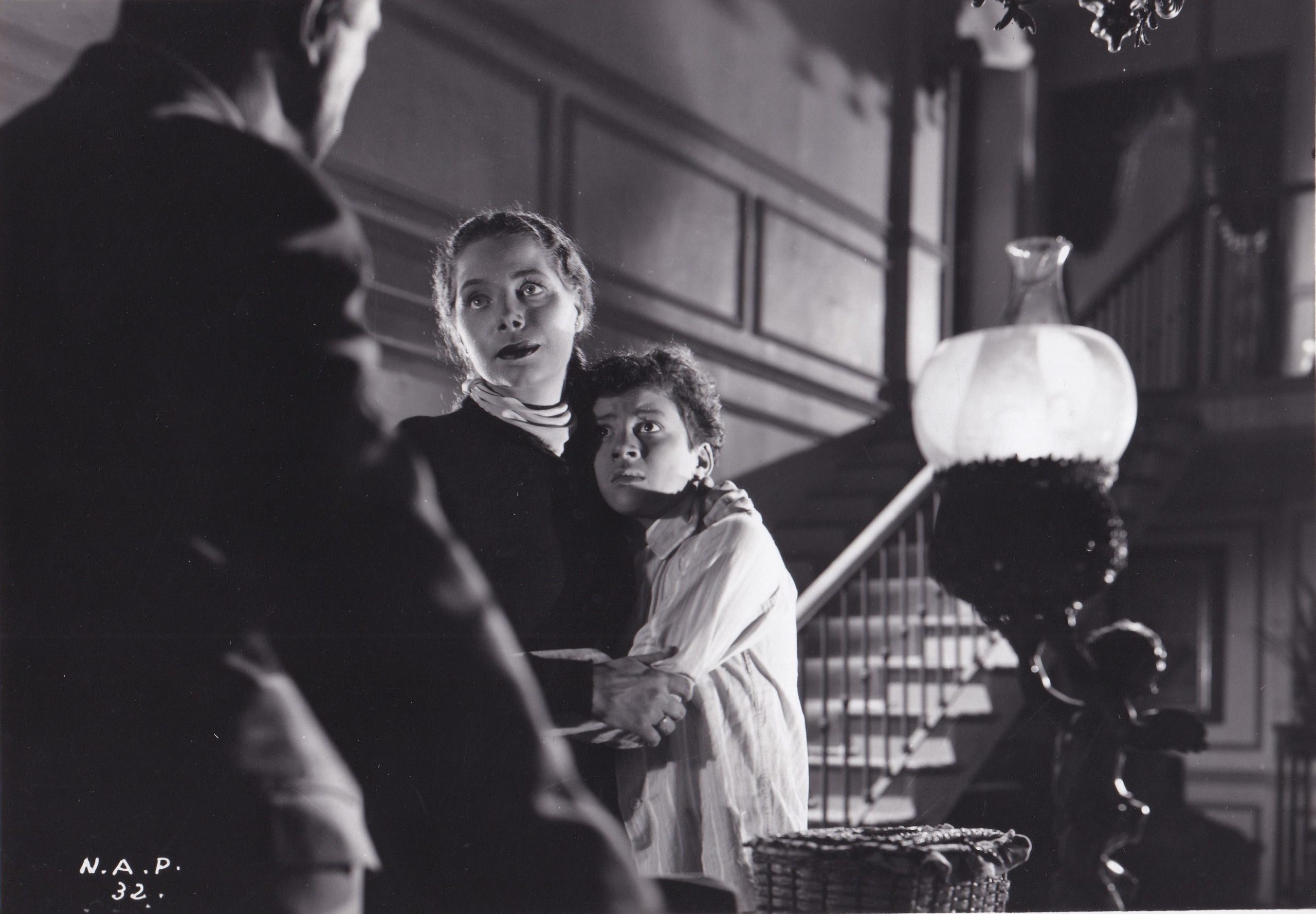
A complex father-son relationship is at the center of this Argentine film noir directed by Carlos Hugo Christensen. Originally meant to be included in a noir trilogy with No abras nunca esa puerta (Never Open That Door, 1952), previously restored by UCLA, the Grimm’s fairy-tale-like Si muero antes de despertar was instead released as a stand-alone feature. In this suspenseful adaptation of a Cornell Woolrich short story, the disappearance of several young girls, presumed to be victims of a sexual maniac, has the local population on edge. Police inspector Santana (Floren Delbene, a popular leading man in Argentina through the 1950s) is stymied by a lack of clues, while his wife (Blanca del Prado) simply says, “Those monsters ... They should leave them to us mothers.” Unknown to either parent, their obstreperous son, Lucho (Néstor Zavarce, who for an earlier Christensen film had earned the title of a “Child Prodigy of Venezuelan Cinema”), has vowed to keep a secret that might be of vital importance. Plagued by guilt, Lucho suffers through a feverish nightmare, courtesy of production designer Gori Muñoz, as surreal as the one concocted by Salvador Dalí in Hitchcock’s Spellbound (1945). The climax of the film, eerily lit by cinematographer Pablo Tabernero (a German émigré), with aspects too strong for North American censors, is nothing short of terrifying and was likely responsible for many sleepless Argentine nights.
Archivist Fernando Martin Peña, responsible for finding the original complete version of Metropolis (1927), has championed Argentine films for decades. In 1969, a large fire destroyed most of the country’s nitrate negatives, and it is hoped that a cinematheque can be built to house their remaining treasures. We have Peña, our collaborators at the Film Noir Foundation and Eddie Muller to thank for this restoration made from scant surviving materials nearly lost to decomposition.—Miki Shannon
DCP. Production: San Miguel Studios. Distribution: San Miguel Studios. Director: Carlos Hugo Christensen. Writer: Alejandro Casona. Adapted from a short story by Cornell Woolrich. Cinematographer: Pablo Tabernero. With: Néstor Zavarce, Blanca del Prado, Floren Delbene, Homero Cárpena.
Restoration funding provided by the Film Noir Foundation and Eddie Muller. Restored by the UCLA Film & Television Archive from a 35mm acetate composite print. Laboratory services by Roundabout Entertainment, Inc, Audio Mechanics, Simon Daniel Sound. Special thanks to Argentina Sono Film, Luis Scalella; Malba Museo de Arte Latinoamericano de Buenos Aires; Fernando Martin Peña.