Visit the UCLA Film & Television Archive website(opens in a new tab) to learn more about upcoming screenings and events.
Free admission. No advance reservations. Ticketing is on a first come, first served basis. Seats will not be assigned.
Screening 1 of 5
Hearst Metrotone News: “Now They're Mr. and Mrs. Dick Powell”
Year: 1936
Country: U.S.
Language: English
Runtime: 30 sec.
Digital. B&W.
Screening 2 of 5
Hearst Metrotone News: “That ‘New Look’ In Men's Hats!”
Year: 1948
Country: U.S.
Runtime: 1 min.
Digital. B&W. Silent.
Screening 3 of 5
Hearst Metrotone News: “Those He-Men Are Here Again!”
Year: 1948
Country: U.S.
Runtime: 30 sec.
Digital. B&W. Silent.
Screening 4 of 5
Hearst Metrotone News: “Police Test TV — Cops Play Robbers”
Year: 1954
Country: U.S.
Language: English
Runtime: 1 min 30 sec.
Digital. B&W.
Screening 5 of 5
Pitfall
Year: 1948
Country: U.S.
Language: English
Runtime: 86 min.
Digital. B&W.
World Premiere of New Restoration
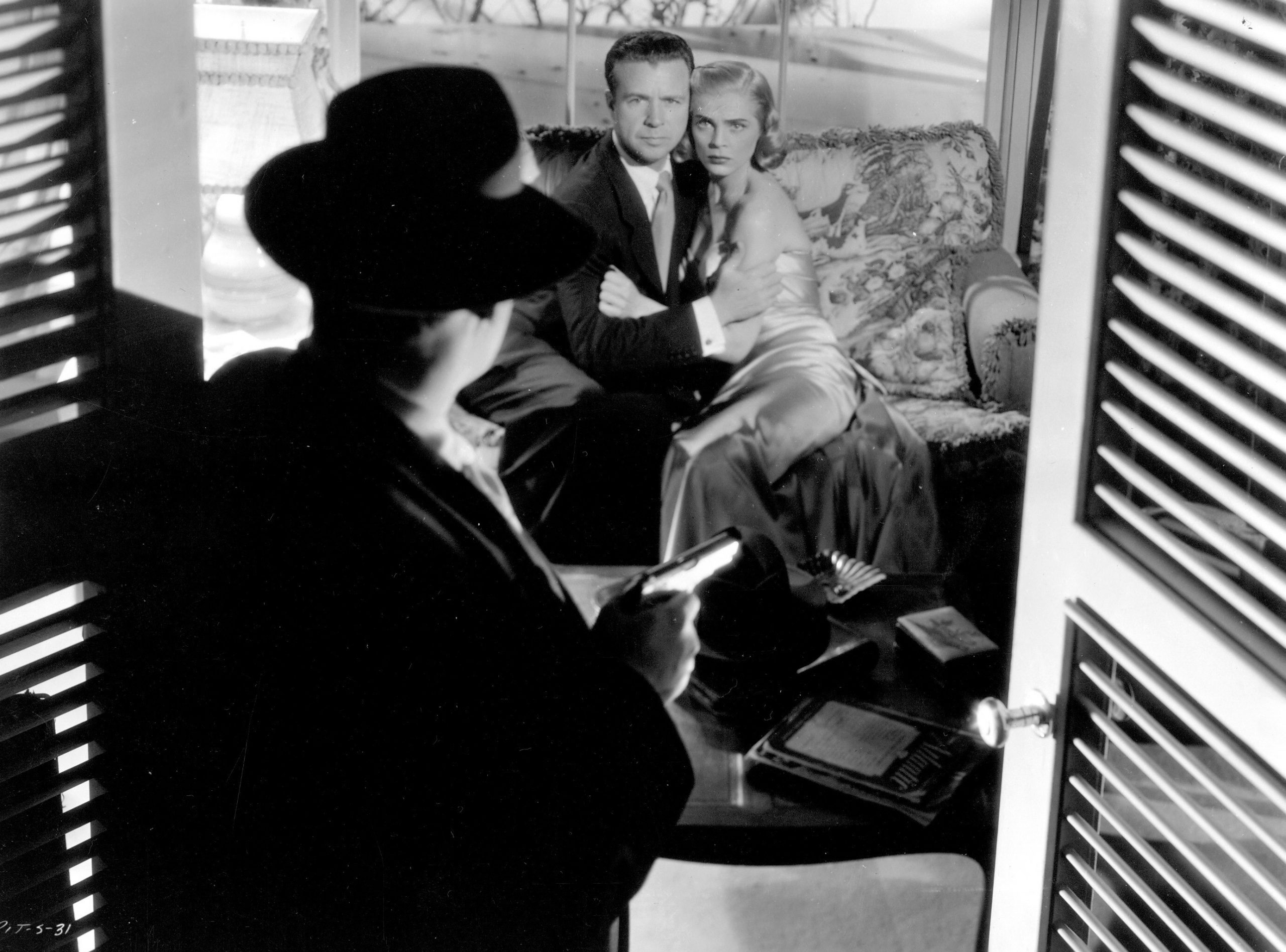
Described as “tight, swift and sexy” by the Los Angeles Daily News, Jay Dratler’s 1947 novel The Pitfall was a perfect vehicle for Hungarian émigré and hard-hitting genre director André de Toth. Despite jettisoning the novel’s more salacious moments due to Hays Code restrictions, screenwriter Karl Kamb and an uncredited William Bowers perfectly capture the trappings of infidelity, larceny and obsession, played out in sun-drenched post-war Southern California (as opposed to the rainy back alleys typical of the noir genre). The Regal Films production was shot at General Service Studios in Hollywood by longtime RKO cinematographer and frequent noir contributor Harry J. Wild. Iconic Los Angeles locations such as Santa Monica Bay, the Miracle Mile May Co. Building and the Hall of Justice were also utilized.
Former Warner Bros. song and dance man Dick Powell had already proven his noir chops as hard-boiled private detective Philip Marlowe in 1944’s Murder, My Sweet, and he is impeccably cast as bored, married insurance man John Forbes, whose life is about to spiral out of control after meeting the alluring Mona Stevens, played by Lizabeth Scott. Raymond Burr had mostly been relegated to bit parts in the nine films he completed in 1948; Pitfall provided a breakout co-starring role, as private investigator J. B. MacDonald, which he plays with subversively kinky malice.
Aided by a script that flips the traditional femme fatale archetype, Scott’s luminous portrayal reveals a more textured and sympathetic victim of circumstance, given that her character is the target of three wildly different and problematic men. The New York Times heralded Scott as “provocative, and acting better than she has ever done before,” and the performance is now considered one of her greatest. Despite some of its atypical attributes, Pitfall is a deftly executed meditation on the degeneration of mid-century masculinity, and it stands as one of the great entries in the noir genre.—Todd Wiener
Production: Regal Films, Inc. Distribution: United Artists. Producer: Samuel Bischoff. Director: André de Toth. Screenwriter: Karl Kamb. Based on the novel by Jay Dratler. Cinematographer: Harry Wild. With: Dick Powell, Lizabeth Scott, Jane Wyatt, Raymond Burr.
Restoration funding provided by the Century Arts Foundation. Restored by the UCLA Film & Television Archive from acetate dupe picture negatives and track negatives. Laboratory services by Roundabout Entertainment, Inc., Audio Mechanics.