Want to learn more about the UCLA Film & Television Archive's screenings and events? Visit the Archive website(opens in a new tab).
Introduction by filmmaker and curator Cherlyn Hsing-Hsin Liu and film historian and curator Steve Anker.
Please note: This screening takes place at 2220 Arts + Archives, 2220 Beverly Blvd., Los Angeles, CA 90057
Total runtime: 80 min.
Screening 1 of 3
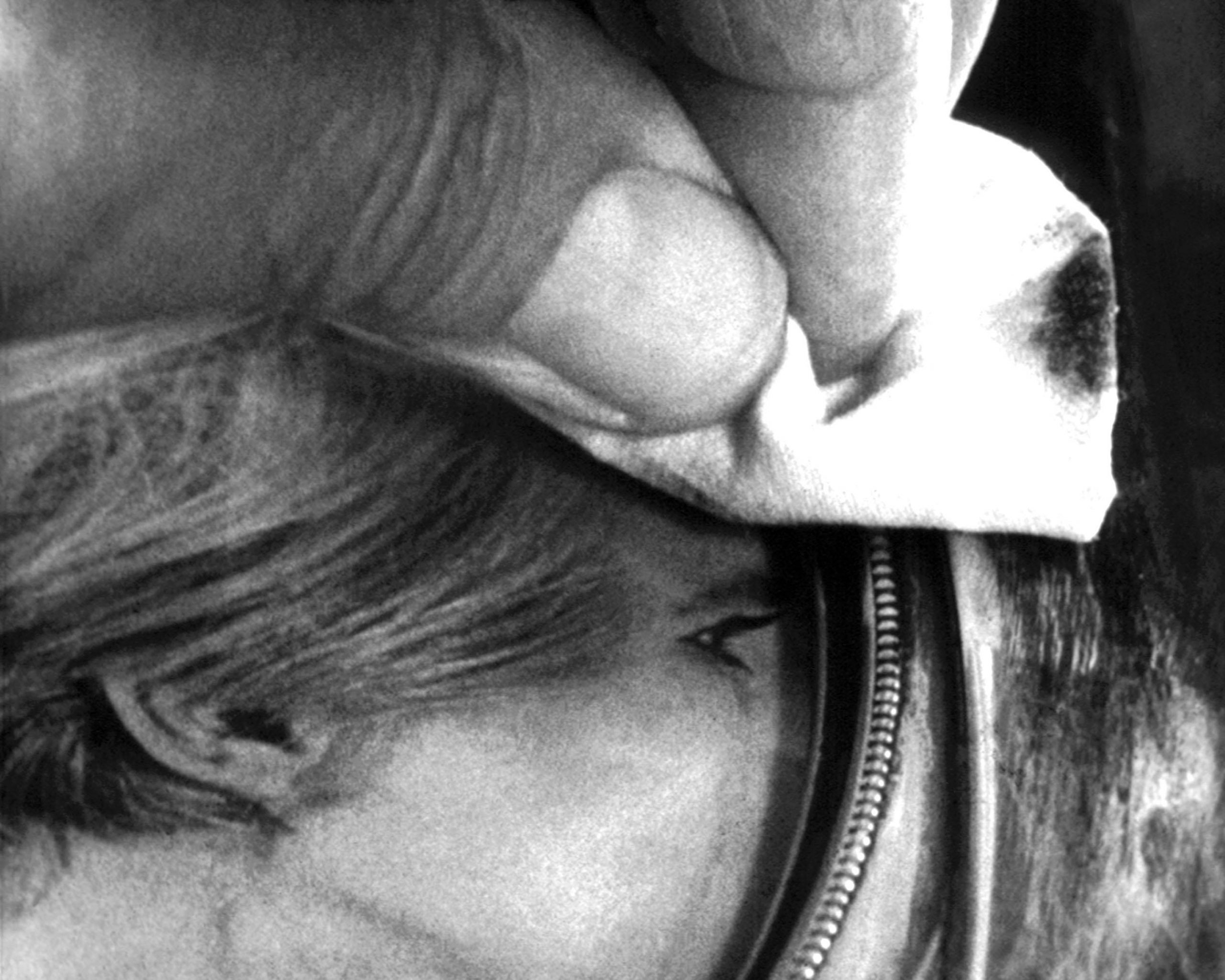
Red Shift
Year: 1984
Country: Sweden
Language: Swedish and English
Runtime: 50 min.
16mm. B&W.
Red Shift is one of Gunvor Nelson’s most admired films, a dense narrative film about family relations in which the various roles are played by members of her family. The film merges two diegetic times, both present and past, and pending between close-ups and long shots. Nelson’s depiction of family life is both candid and considerate, displaying an amalgamation of emotions ranging from delight to distress.—Professor John Sundholm, Stockholm University
Director: Gunvor Nelson.
Screening 2 of 3
Frame Line
Year: 1984
Country: Sweden
Language: Swedish and English
Runtime: 50 min.16mm
16mm. B&W.
Frame Line is Nelson’s first collage film. The film that inaugurated her original series of animated films, all made at the Film Workshop in Stockholm. Frame Line is a reflection on Stockholm and Sweden, on Nelson’s return to her native country and a place that is both familiar and distant, both beautiful and ugly at the same time. The film begins with images and glimpses of Stockholm that Nelson has collected, then developing this audiovisual material into a new visual work where animation becomes a way of discovering both what the camera has captured and what can be created anew through free association.—Professor John Sundholm, Stockholm University
Director: Gunvor Nelson.
Screening 3 of 3
Time Being
Year: 1991
Country: Sweden
Language: English
Runtime: 8 min.
16mm. B&W.
Time Being is a commemoration in four sequences of Nelson’s mother. The film that starts and ends with lengthy black leader, is a brutal yet beautiful depiction of her mother dying and how the bond between them is cut off. After a prologue follows a series of three shots, each beginning in static takes of her mother lying in a bed at a hospital. For each shot the distance to the mother increases and the camera moves closer towards Nelson.—Professor John Sundholm, Stockholm University
Director: Gunvor Nelson.
Related Series
Have Further Questions?
We're here to help. Chat with a librarian 24/7, schedule a research consultation or email us your quick questions.