Visit the UCLA Film & Television Archive website(opens in a new tab) to learn more about upcoming screenings and events.
Free admission. No advance reservations. Ticketing is on a first come, first served basis. Seats will not be assigned.
Introduction by animation historian Jerry Beck and Senior Film Preservationist Miki Shannon.
Screening 1 of 3
Way Back When a Triangle Had Its Points
Year: 1940
Country: U.S.
Runtime: 8 min.
Digital. B&W.
West Coast Premiere of New Restoration
Way Back When a Triangle Had Its Points was the first of 12 in Fleischer Studios’ Stone Age cartoons. It features a fabulous Betty Boop-style, Stone Age working girl on the hunt for a typist job. Paramount Pictures announced the series in the Miami News in June 1939, saying, “it will be based on the absurdity of modern life and modern inventions.” A rock-solid attempt, it wasn’t quite the smash the studio was looking for. However, Dan Gordon, one of the Fleischer animators on the project, later joined Hanna-Barbera and was a key creator of The Flintstones.—Jackie Forsyte
DCP. Production: Fleischer Studios. Distribution: Paramount Pictures. Director: Dave Fleischer. Animation: David Tendlar, Thomas Golden. Writer: William Turner.
Restoration funding provided by ASIFA-Hollywood. Restored by the UCLA Film & Television Archive from 35mm nitrate original picture and track negatives. Laboratory services by Roundabout Entertainment, Inc., Audio Mechanics. Special thanks to Paramount Pictures Archive.
Screening 2 of 3
The Nutty Network
Year: 1939
Country: U.S.
Runtime: 6 min.
Digital. Color.
World Premiere of New Restoration
Just a year earlier, the 1938 radio broadcast of H. G. Wells’ The War of the Worlds stunned the public, convincing many that Martians were invading Earth. Terrytoons’ The Nutty Network cleverly spoofs the radio play, transforming public anxiety into slapstick comedy. The short exemplifies animation’s ability to respond quickly to contemporary culture with a playful critique of mass communication at a time when radio dominated American media. Although Terrytoons adopted Technicolor later than other studios, this short’s vibrant use of color showcases the expressive power of the technology, even in humorous satire.—Jackie Forsyte
DCP. Production: Terrytoons. Distribution: 20th Century Fox. Producer: Paul Terry. Director: Mannie Davis. Writer: John Foster.
Restoration funding provided by ASIFA-Hollywood. Restored by the UCLA Film & Television Archive from 35mm nitrate successive exposure positive, acetate track negative and track positive. Laboratory services by Roundabout Entertainment, Inc., Audio Mechanics. Special thanks to Paramount Pictures Archive.
Screening 3 of 3
Merrily We Live
Year: 1938
Country: U.S.
Runtime: 95 min.
Digital. B&W.
World Premiere of New Restoration
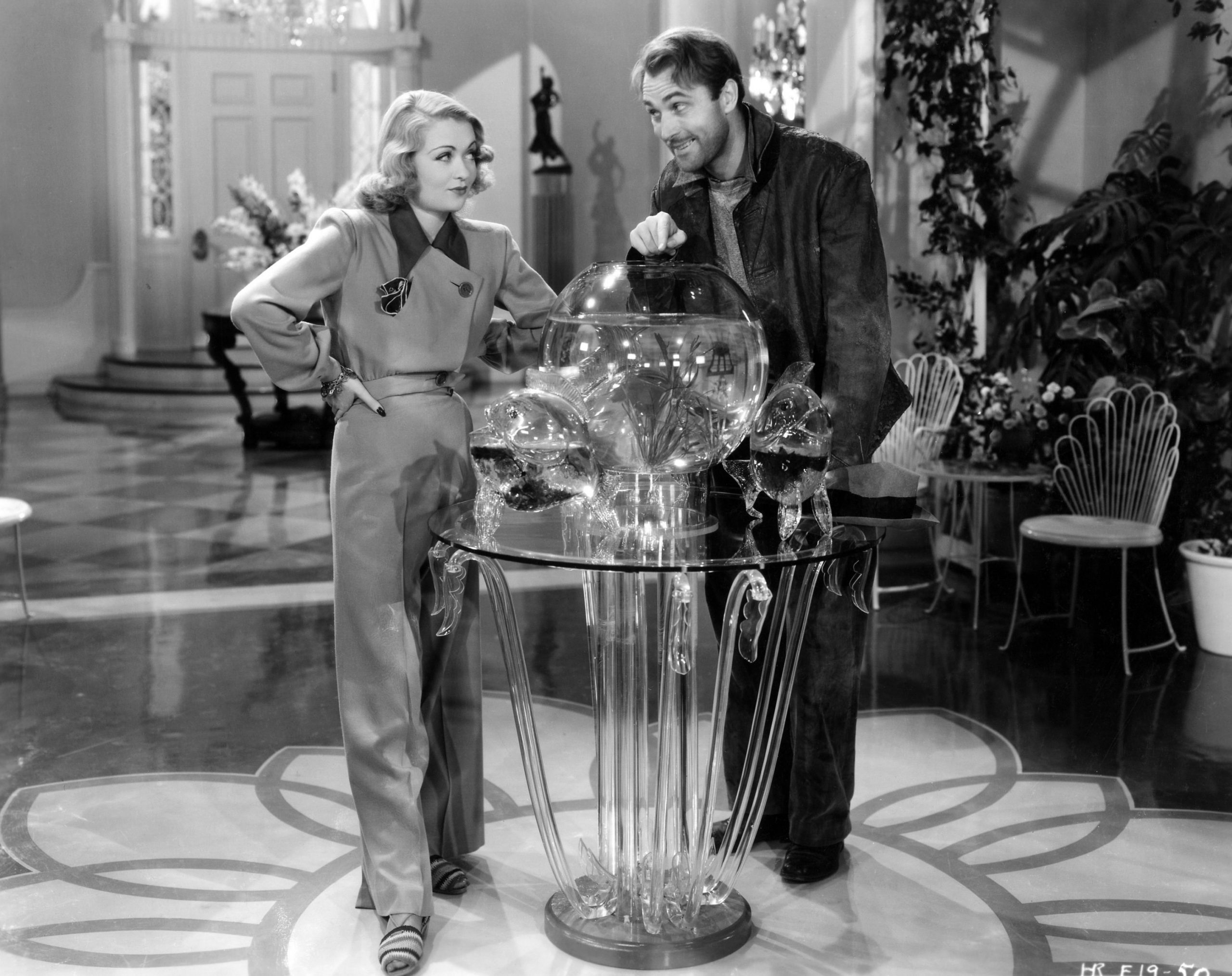
Debuting near the end of the screwball comedy trend, Merrily We Live is one of the zaniest. When novelist and ladies’ man Wade Rawlins’ (Brian Aherne) car breaks down he seeks help at a mansion inhabited by a family of eccentrics. Mistaken for a tramp by the well-meaning matron of the house, Mrs. Kilbourne (Billie Burke), Rawlins finds himself hired as the family chauffeur. His protests fall on deaf ears, and the handsome young man soon becomes embroiled in romantic encounters and family crises. Throw in a large white rabbit, reproducing goldfish, a raucous parrot and two rambunctious Great Danes, and you have another hit from Hal Roach Studios, “Laugh Factory to the World.”
Based on the 1924 novel The Dark Chapter: A Comedy of Class Distinctions and often compared to My Man Godfrey (1936), this spoof of social conventions never takes itself seriously; as one reviewer wrote, “Insanity runs rampant!” Roach, director Norman Z. McLeod and cast members Burke, Constance Bennett and Alan Mowbray from the hit Topper (1937) team up once again and, as a poster proclaimed, Merrily We Live “tops Topper by a hundred howls!” Best known for short comedies starring Laurel and Hardy and the Our Gang kids, Hal Roach Studios earned accolades when this film was nominated for five Academy Awards, including Best Actress in a Supporting Role for Burke, Best Cinematography, Best Art Direction, Best Music, Original Song, and won for Best Sound Recording. Roach would further prove his prowess the next year, receiving critical acclaim for Of Mice and Men (1939). Cinematographer Norbert Brodine and art director Charles Hall give the film a stunning look with depth of focus, shades of gray and an overall visual style not often seen in a comedic production.
And we’d all like to know how many takes were needed to film the opening ensemble song!—Miki Shannon
DCP. Production: Hal Roach Studios. Distribution: MGM. Producer: Milton H. Bren. Director: Norman Z. McLeod. Screenwriters: Eddie Moran, Jack Jevne, E. J. Roth. Cinematographer: Norbert Brodine. With: Constance Bennett, Brian Aherne, Alan Mowbray, Billie Burke, Patsy Kelly.
Restoration funding provided by the Century Arts Foundation. Restored by the UCLA Film & Television Archive in collaboration with Academy Film Archive from the 35mm nitrate original picture and track negatives, nitrate composite fine grain, nitrate track positive and nitrate composite print. Laboratory services by Roundabout Entertainment, Inc., Audio Mechanics, Simon Daniel Sound.