Visit the UCLA Film & Television Archive website(opens in a new tab) to learn more about upcoming screenings and events.
Free admission. No advance reservations. Ticketing is on a first come, first served basis. Seats will not be assigned.
Introduction by Associate Motion Picture Curator Steven K. Hill.
Screening 1 of 4
Hearst Metrotone News: “Famous Wind-jammer Wrecked on British Coast”
Year: 1936
Country: U.S.
Language: English
Runtime: 30 sec.
Digital.
Screening 2 of 4
Hearst Metrotone News: “U.S. Ambassador Has John Bull All Excited”
Year: 1938
Country: U.S.
Language: English
Runtime: 1 min.
Digital.
Screening 3 of 4
Hearst Metrotone News: “Town Criers’ Championship”
Year: 1953
Country: U.S.
Language: English
Runtime: 1 min.
Digital.
Screening 4 of 4
Lorna Doone
Year: 1922
Country: U.S.
Language: English
Runtime: 81 min.
Digital. B&W and tinted/toned. Silent.
World Premiere of New Restoration
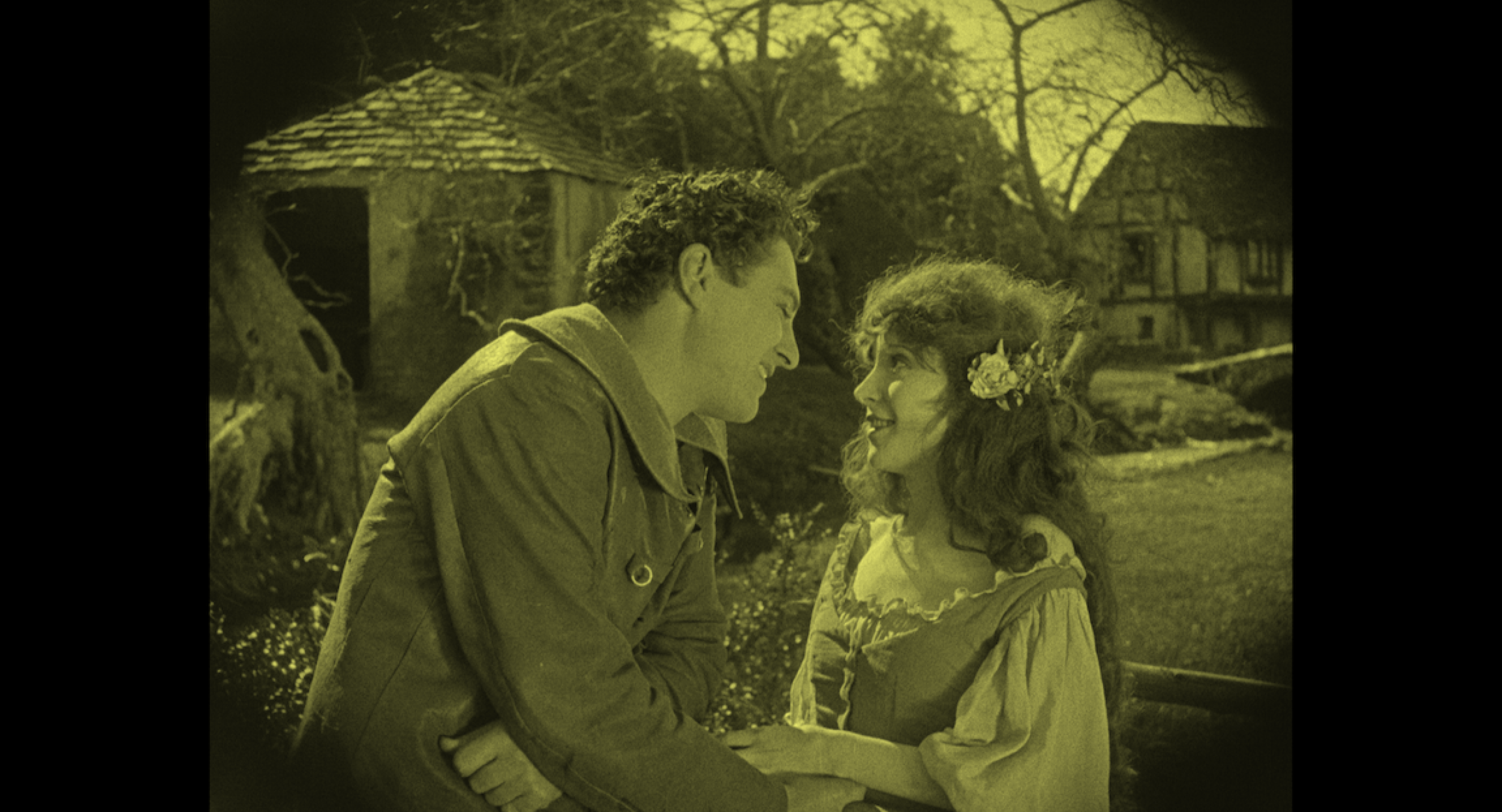
French-born director Maurice Tourneur’s adaptation of R. D. Blackmore’s 19th-century novel Lorna Doone offered audiences a romantic drama of love and revenge set amid the picturesque landscapes of Exmoor in southwest England. Influenced by his background in painting and illustration, Tourneur approached filmmaking with a pronounced sensitivity for pictorial design, treating the frame as a carefully organized visual field that could convey mood and meaning. After moving to the United States in 1914, he firmly established his reputation through works such as The Wishing Ring (1914), The Poor Little Rich Girl (1917), The Blue Bird (1918) and The Last of the Mohicans (1920), all admired for their visual sophistication and cinematic storytelling.
Lorna Doone is supported by a cast aligned with Tourneur’s preference for naturalistic, non-theatrical performances. Madge Bellamy’s spirited portrayal of Lorna proved to be one of the defining roles of her career and showcased her distinctive, luminous presence, earning her the nickname “the exquisite Madge.” She would later star in the John Ford epic The Iron Horse (1924) and the cult-classic White Zombie (1932), the latter of which has been restored by UCLA. John Bowers, one of the top leading men in early 1920s Hollywood, imbues the hero John Ridd with a quiet physicality and sincerity. Anchoring the drama are strong supporting turns by Frank Keenan as the fallen-nobleman-turned-outlaw Sir Ensor Doone, and Donald MacDonald as the brutal Carver Doone, whose menacing physique and explosive intensity lend weight to the film’s central conflict.
While much of the production was shot at the Thomas H. Ince Studio in Culver City (reportedly with four cameras, instead of the customary two), Tourneur supplemented the studio-bound sets with outdoor location photography to heighten the film’s sense of authenticity. A critical success when released, Lorna Doone remains one of the most visually and dramatically accomplished American silent films of the early 1920s.—Steven K. Hill.
DCP. Production: Thomas H. Ince Corp. Distribution: Associated First National Pictures. Producer/Director: Maurice Tourneur. Screenwriters: Katherine Reed, Cecil G. Mumford, Wyndham Gittens. Based on the novel by R. D. Blackmore. Cinematographer: Henry Sharp. With: Madge Bellamy, John Bowers, Frank Keenan, Donald MacDonald, May Giracci.
Restoration funded by the Hobson/Lucas Family Foundation. Restored by the UCLA Film & Television Archive and The Film Foundation from a 35mm dupe picture negative, 35mm nitrate fine grain sections and 16mm prints. Laboratory services by Roundabout Entertainment, Inc., FotoKem. Special thanks to Academy Film Archive, Kevin Brownlow, Dan Bursik, Jere Guldin, National Film Preservation Foundation.