Speaker: Yingpin Zhang | 张英聘, Professor, University of the Chinese Academy of Social Sciences
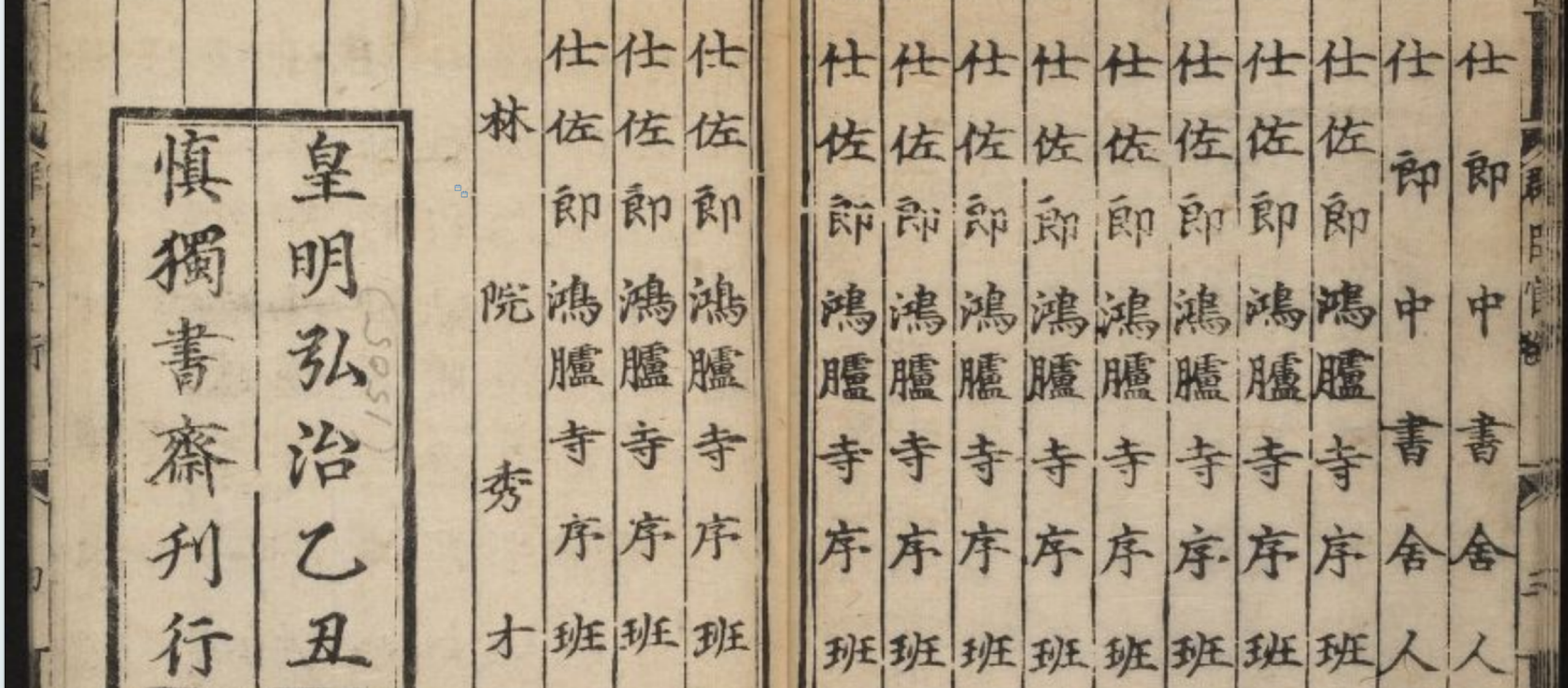
The compilation and publication of local gazetteers flourished greatly during the Ming dynasty and occupy an important place in the history of Chinese gazetteers. The number of gazetteers produced in the Ming was enormous—according to statistics, more than four times the total produced during the Song and Yuan dynasties combined.
Various types of local gazetteers emerged in this period, and their compilation formats underwent numerous adaptations and innovations. During the Yongle era, guidelines for gazetteer compilation were issued twice, exerting a significant influence on later generations. The extensive practice of compiling gazetteers in the Ming also gave rise to rich theoretical developments. Governments at all levels attached great importance to gazetteer compilation, with personnel fulfilling specialized roles. Gazetteers were published not only by government institutions at different administrative levels but also through commercial and private printing, accompanied by major innovations in printing technology.
The main discussion can be developed along the following aspects:
1. Stages in the development of Ming local gazetteer compilation and publication.
The compilation and publication of local gazetteers in the Ming corresponded to the dynasty’s socio-economic development. Chronologically, it can be divided into three main stages: the planning and foundational stage, the development and maturation stage, and a period of relative decline.
2. Types of Ming local gazetteers.
There were many types of gazetteers in the Ming, ranging from nationwide comprehensive gazetteers to those of provinces, prefectures, sub-prefectures, and counties, as well as township gazetteers and various specialized gazetteers. Some of these categories were innovations of the Ming period.
3. Compilation formats and theoretical development of Ming local gazetteers.
Ming gazetteer compilation formats inherited traditions from the Song and Yuan while introducing innovations, including the “pingmu” (flat-entry) style, “gangmu” (outline-and-detail) style, biographical style, chronological style, and the “sanbao” format, among others. The compilation format of the unified gazetteers and the Yongle-era guidelines further promoted the standardization and development of gazetteer writing.
4. Printing and publication of Ming local gazetteers.
From the central government to provincial, prefectural, and county levels, gazetteers were widely printed and published in the Ming. Commercial presses and private family printing also produced gazetteers. With advances in printing technology during this period, the quality and sophistication of gazetteer printing saw significant improvement.
Click the More Details button to RSVP or register now(opens in a new tab).
Zhang Yingpin, Ph.D. in History, is a researcher at the Local Gazetteer Office of China, a professor and doctoral supervisor at the University of the Chinese Academy of Social Sciences, and concurrently serves as Deputy Secretary-General of the China Local Gazetteers Society. Her main research focuses on the history of local gazetteers and the history of the Ming dynasty.
She is the author of works such as Research on Local Gazetteers of Southern Zhili in the Ming Dynasty and Chinese History and Civilization. She has participated in the collation and annotation of several Ming and later historical texts, including Records of Grain Transport Ships, the Wanli-era Gazetteer of Hangzhou Prefecture, the Yongzheng-era Comprehensive Gazetteer of Zhejiang, the Republican-era Draft of the Revised Comprehensive Gazetteer of Zhejiang, and the Daoguang-era Combined Gazetteer of Wujin and Yanghu.
She has also served as chief editor of works such as Studies in Historical Records and Gazetteers, authored more than 60 academic articles, and led the National Social Science Fund project “Collation and Research on Rare Gazetteer Maps Collected in the Harvard-Yenching Library.” Her current research includes a major project of the Chinese Academy of History under the National Social Science Fund, titled A General History of Chinese Local Gazetteers.
Related Series
Have Further Questions?
We're here to help. Chat with a librarian 24/7, schedule a research consultation or email us your quick questions.