More Information
When people think of conservation, they might imagine someone carefully treating a damaged book to restore it to its original condition. Part of preventive conservation is the practice of monitoring collections and their environments for risks and intervening when necessary to stop damage before it happens.
As the first preventive conservation assistant for UCLA Library, I had the opportunity to work closely with post-graduate preventive conservator Kimi Taira with the shared goal of keeping collections circulating and accessible by protecting them from common threats.
Monitoring Library Environments
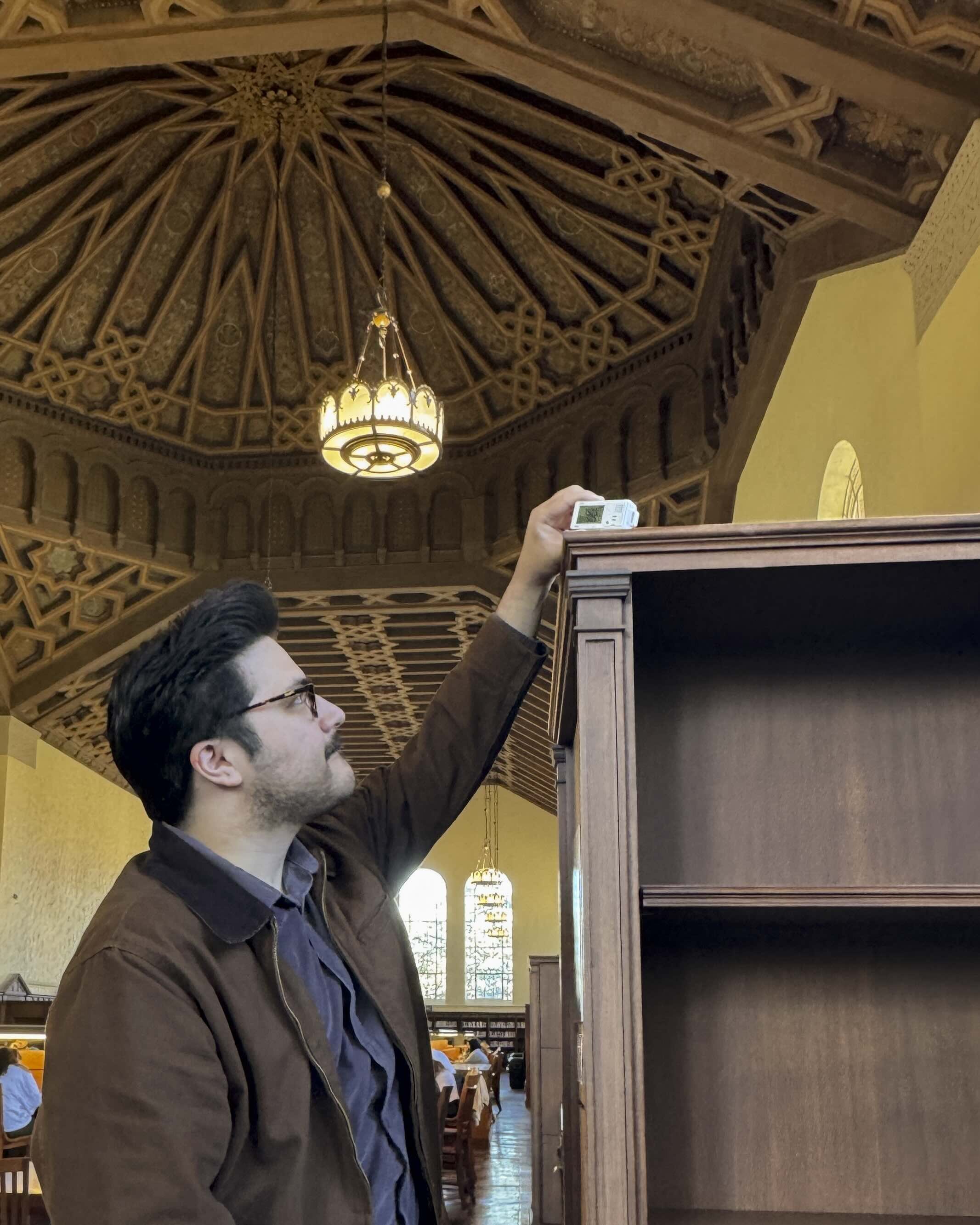
The two most significant variables we monitored across the campus-wide Library system were the temperature and relative humidity. If these two values stray above of expected boundaries, the chances of mold growth that can damage or destroy collections is drastically increased. Some pests for whom books are a common food source are also drawn to warm and humid environments.
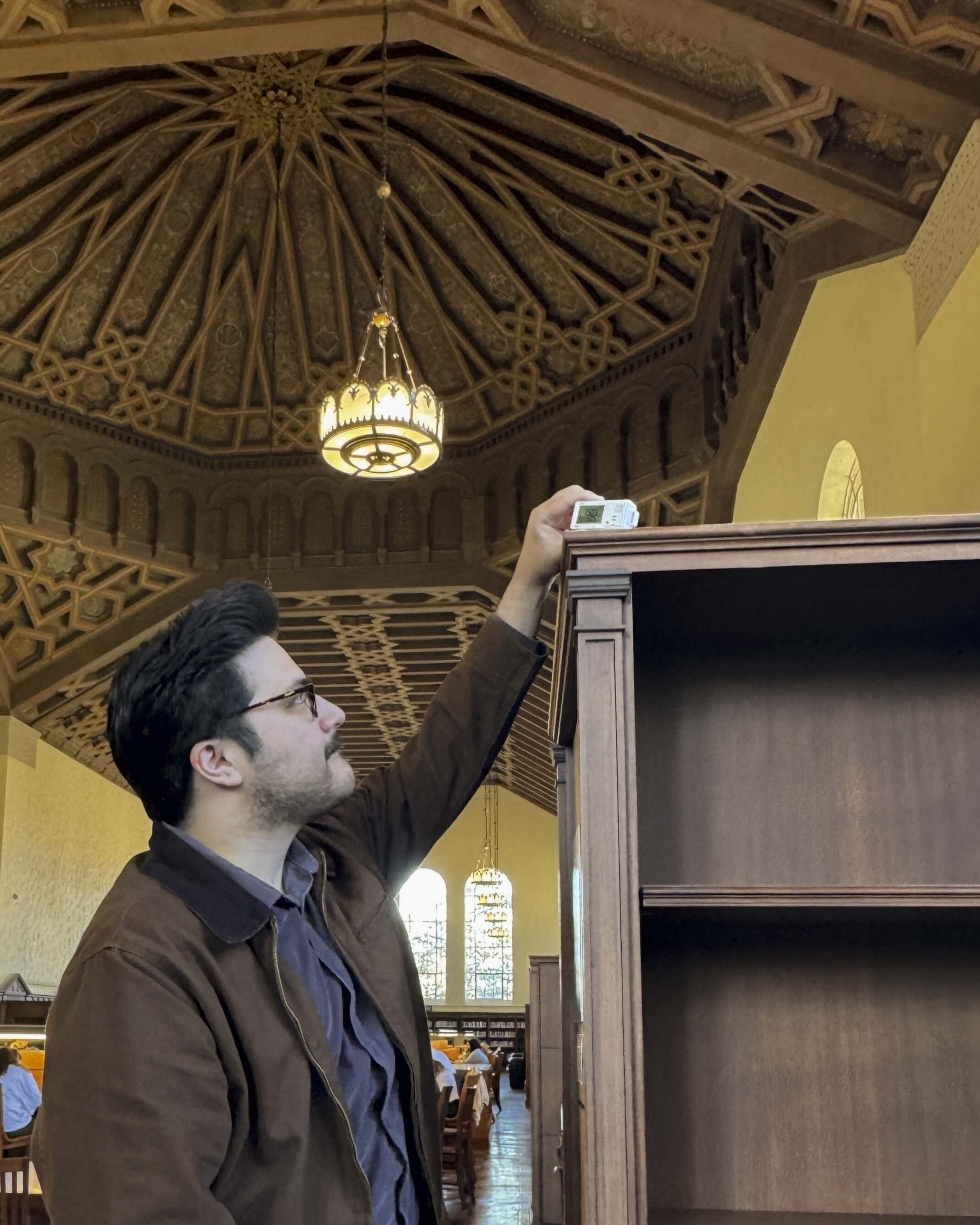
My main responsibility as preventive conservation assistant was conducting weekly rounds across 9 UCLA Library locations, collecting temperature and relative humidity data from data loggers placed among the stacks. Wherever possible, we used multiple data loggers in spaces, helping to ensure that a single area’s readings were not wrongly interpreted as representing an entire library’s environment.
By comparing each library’s status with its known baseline and with local exterior climate conditions, we could identify irregularities and work to mitigate them. The Charles E. Young Research Library had the most data loggers during my time in the role, with 26 different measurement sites.
After becoming familiar with the environmental monitoring process, I designed and implemented a 12-week monitoring study for the Powell Library Main Reading Room and Rotunda, providing new information on temperature and light patterns in these spaces.
Identifying Collection Pests and Supporting Collections Care
Another focus of my role was cataloging and imaging pests found in UCLA Library collections. Different pests favor different environments and food sources. The type of pests found can provide give clues about what issues are present, and how to best respond.
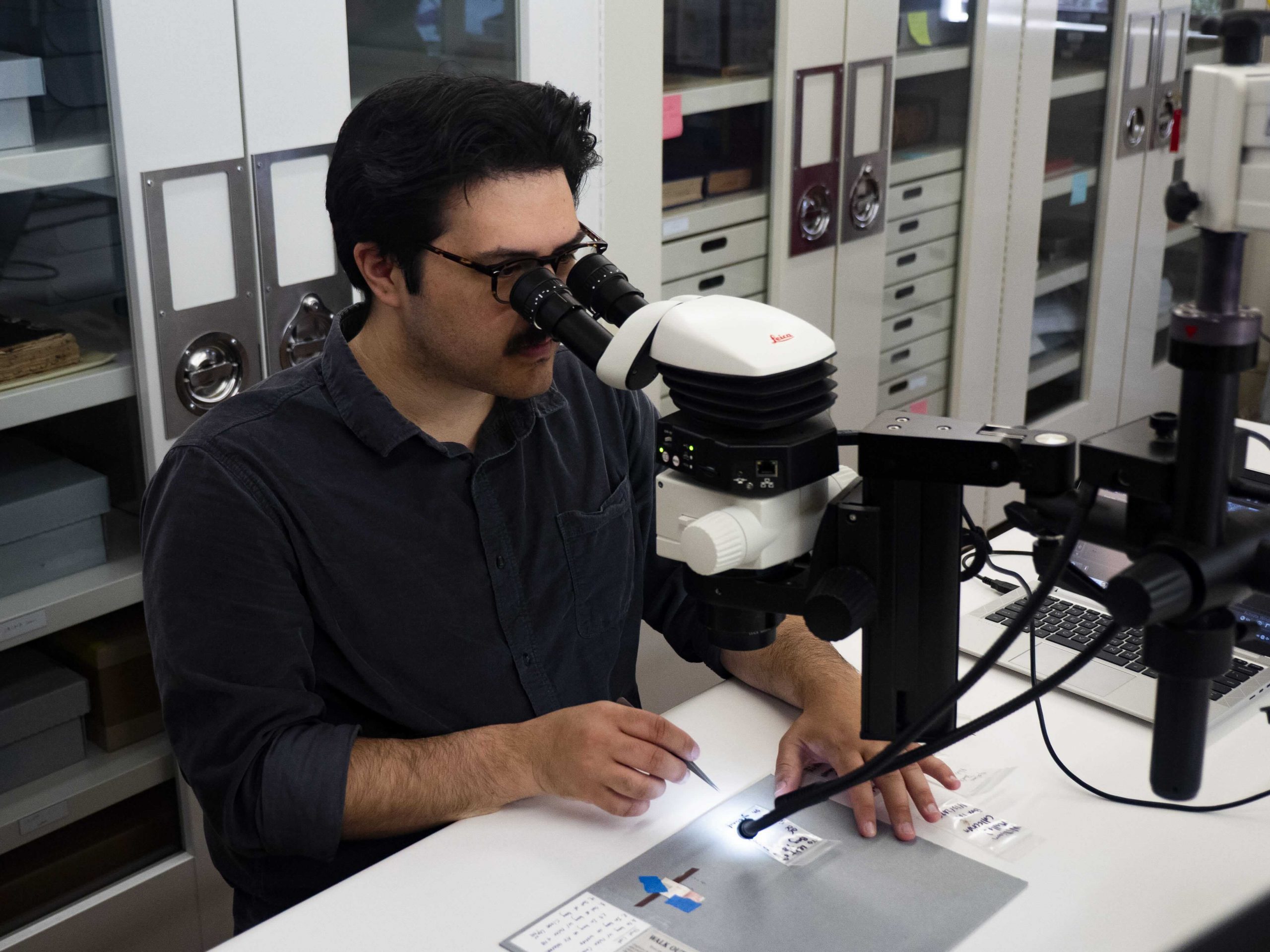
I established a working database to record information about each found specimen and captured high-magnification images for use in future library staff training materials.
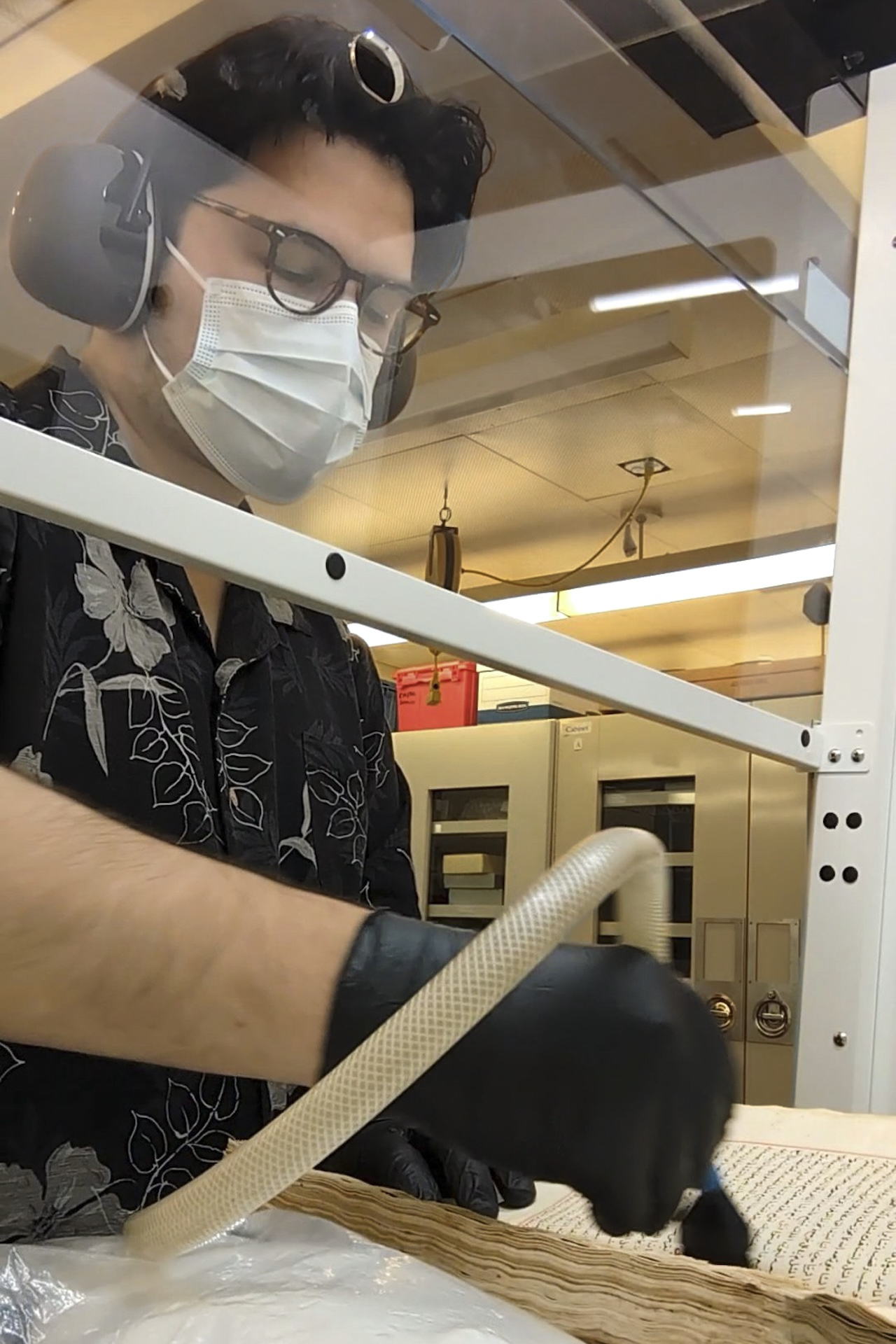
In addition to environmental monitoring and pest processing, I cataloged the Preservation & Conservation team’s collection of reference books, created new workflow documentation for the lab’s stereomicroscope and conducted mold remediation on damaged books.
Learning Through Preventative Conservation
As a Library & Information Studies student training for an archival career, my time in this role helped me develop a more holistic view of what it takes to care for objects throughout their life cycle.
Coursework provides a valuable foundation of theoretical understanding for the cultural heritage field, but this position exposed me to a practical facet of collections care that was only briefly touched on in lectures. I had the privilege of working adjacent to seasoned conservators who were always happy to answer questions and who regularly enlisted my help in ongoing projects that further broadened my perspective and breadth of experience.
I am honored to be taking all of that guidance with me into the field!
Everyone Can Help Protect Collections
The Preservation & Conservation team cares for thousands of collection items in a given year, but with UCLA Library collections totalling in the millions, it is impossible to maintain a comprehensive view of every item.
Library users can contribute to keeping UCLA collections accessible to everyone for as long as possible. If you notice signs of water damage, mold, or pests on your next library visit, please let a library staff member know.