Visit the UCLA Film & Television Archive website(opens in a new tab) to learn more about upcoming screenings and events.
Free admission. No advance reservations. Your seat will be assigned to you when you pick up your ticket at the box office. Seats are assigned on a first come, first served basis. The box office opens one hour before the event.
In person: Q&A with UCLA Cinema and Media Studies Professor Kriss Ravetto-Biagioli and UCLA Comparative Literature Professor Nouri Gana.
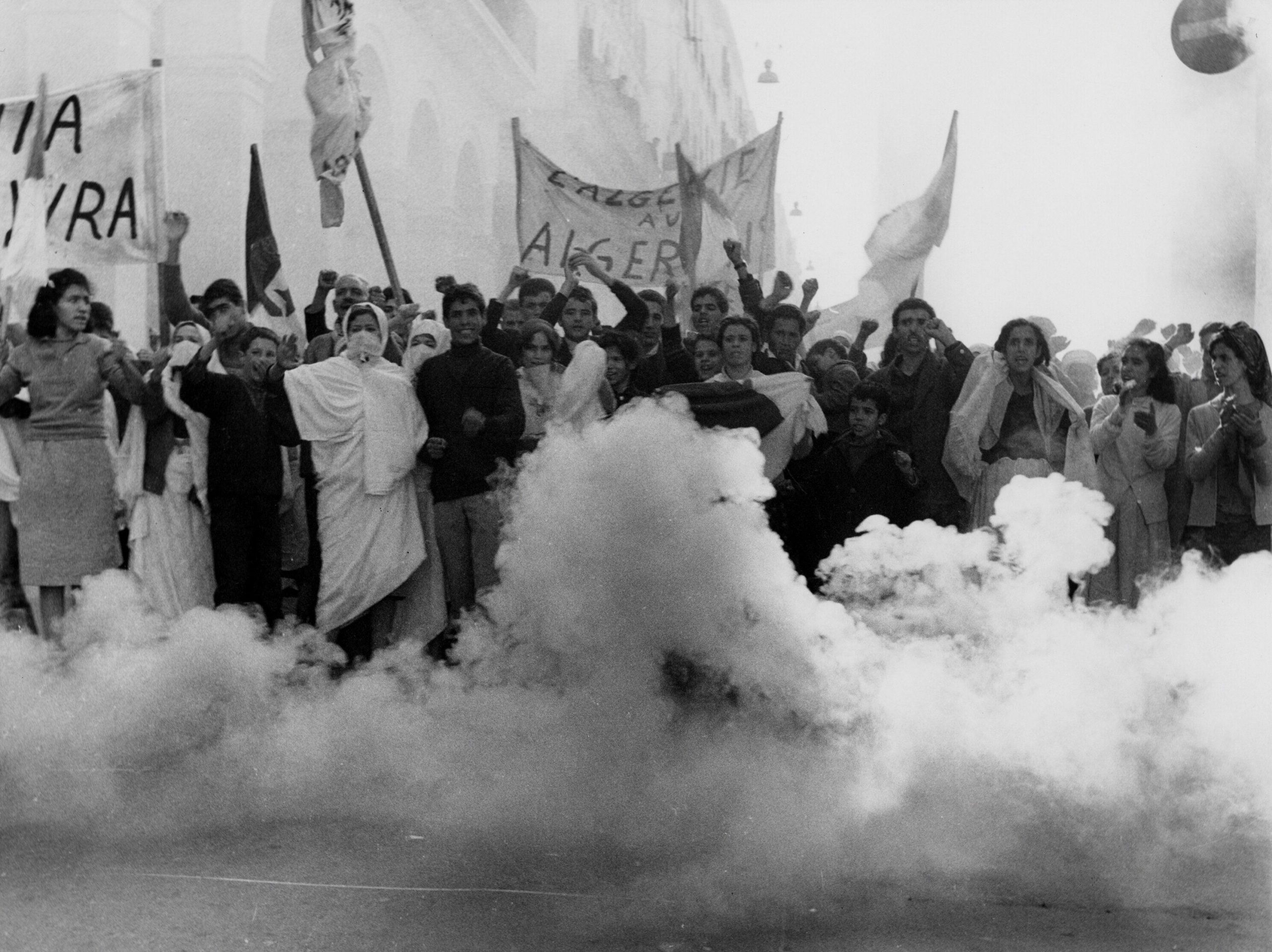
60 years after its first screening in Algiers, The Battle of Algiers has lost none of its political punch. Premiering internationally at the 1966 Venice Film Festival, where it won the Golden Lion, the film was celebrated for the audacity with which it confronted the still-raw history of French colonialism and the Algerian struggle for independence. In France, however, it remained effectively banned for years. Its extraordinary political afterlife has been equally paradoxical: a film embraced by anticolonial and revolutionary movements around the world has also been studied by military and counterinsurgency strategists, including at the Pentagon during the Iraq War.
Starring almost exclusively nonprofessional actors and shot entirely on location in Algiers in a strikingly realist, quasi-documentary style, Gillo Pontecorvo’s film reconstructs the pivotal 1957 Battle of Algiers during the Algerian War of Independence (1954–62). Beginning with French paratroopers closing in on FLN militant Ali La Pointe, the film moves backward to trace his politicization and the escalating confrontation between the National Liberation Front and the French colonial state. Yet The Battle of Algiers is less the story of an individual revolutionary than of a people becoming a political subject.
Made shortly before the manifestos that would theorize “Third Cinema,” the film became one of its enduring touchstones: cinema conceived not simply as representation but as intervention. Its unsettling treatment of colonialism, revolutionary violence, torture and collective resistance continues to raise urgent questions about political violence, national liberation and the unfinished work of decolonization.
Note written by UCLA Cinema and Media Studies Professor Kriss Ravetto-Biagioli and UCLA Comparative Literature Professor Nouri Gana.
HER WEDDING NIGHT
Year: 1966 Country: Italy / Algeria Language: Arabic, English and French with English subtitles Runtime: 122 min. Digital. B&W.
Director: Gillo Pontecorvo. Screenwriters: Gillo Pontecorvo, Franco Solinas. With: Brahim Hadjadj, Mohamed Ben Kassen, Yacef Saâdi.